

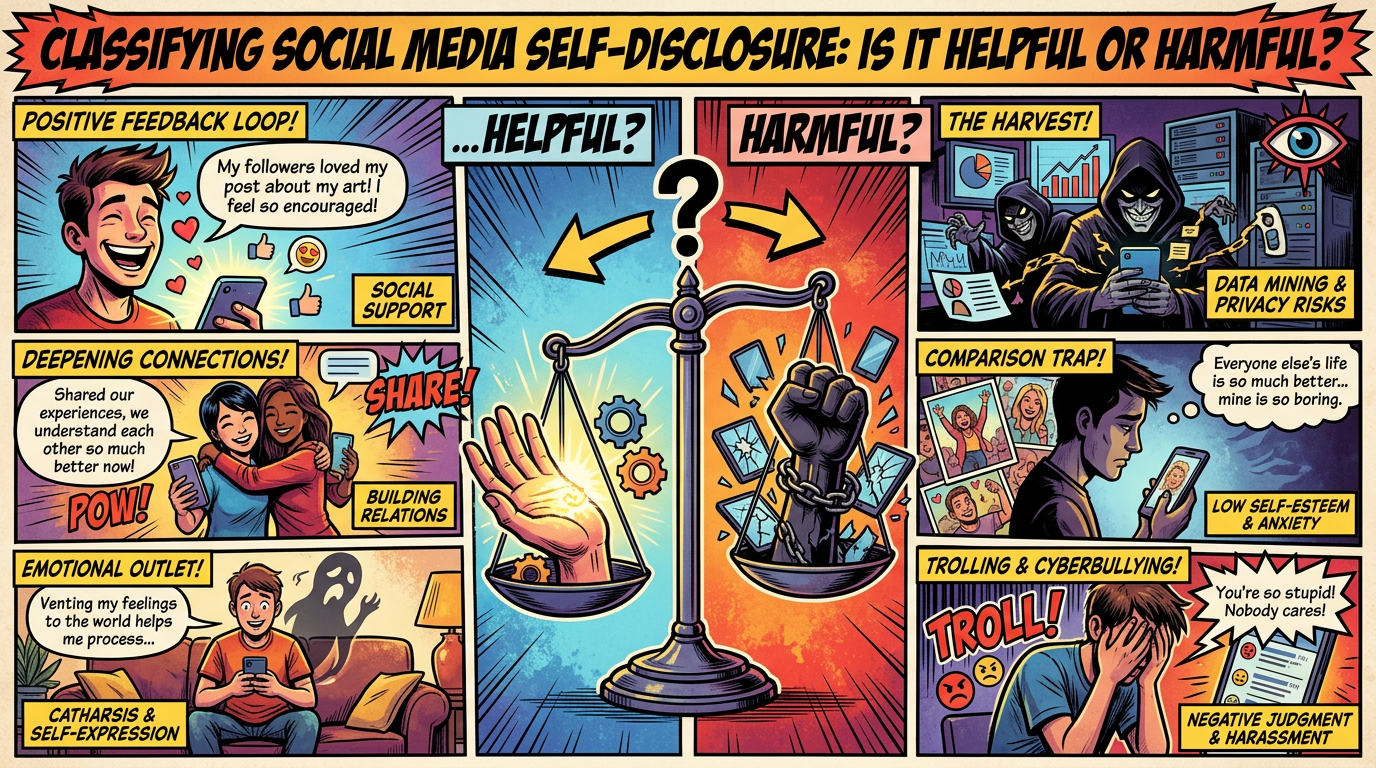
When asking, in classifying social media self-disclosure, is it helpful or harmful, we face more than a question of online behavior. A post may reveal loneliness, celebrate healing, or expose a painful struggle. Thoughtful categories can help us notice patterns, understand risks, and respond with care. Yet classification becomes harmful when it reduces a whole person to a label or invites quick condemnation.
For people of faith, this calls for spiritual discernment and moral responsibility. Privacy matters, and so does the biblical call to speak truth with wisdom and love. How can faith communities use categories to encourage honesty, accountability, and compassion rather than shame or surveillance? The answer begins by remembering that every disclosure represents a person still growing through forgiveness, redemption, and community. Our goal should not be to judge from a distance, but to create space for truthful, gracious support.
What Social Media Self-Disclosure Reveals—and What It Cannot
Self-disclosure means sharing personal experiences, emotions, beliefs, struggles, relationships, or private information through social platforms. A post might be an intentional testimony about redemption, a casual story from daily life, an emotional vent, an honest confession, or an appeal for attention and support. Sometimes, it is several of these at once.
In classifying social media self-disclosure, it can help to ask what the writer may be seeking. Are they offering encouragement, processing pain, seeking prayer, or sharing more than they intended? These categories provide useful context, but they do not explain everything. Audience, consent, timing, and emotional state can significantly shape what someone chooses to reveal.
An online post is a partial snapshot, not a complete portrait. It cannot reliably measure someone’s character, spiritual maturity, motives, or relationship with God. A person may speak openly while still feeling confused, or remain quiet while carrying deep faith and integrity.
For that reason, disclosures deserve humility rather than quick judgment. We can notice patterns and respond wisely while remembering that every post comes from a person still growing through forgiveness, redemption, and community.
When Classification Is Helpful for Spiritual Discernment
Classification can serve love when it helps us discern what kind of care a post may require. A disclosure might call for prayer, a private conversation, professional support, practical help, or no response at all. Recognizing these differences keeps us from treating every post as entertainment, emergency, or evidence against someone’s character.
For example, a testimony about recovery may invite encouragement, while a message expressing immediate danger may require compassionate intervention and professional help. A repeated public conflict might suggest the need for a private boundary rather than another public debate. In asking, in classifying social media self-disclosure is this helping me respond wisely? we shift attention from labeling people to serving them well.
Patterns can also invite honest self-examination. Impulsive disclosures, repeated appeals that pressure others, or constant exposure of private conflict may reveal habits that need prayer, counsel, and healthier digital boundaries. Yet discernment must remain compassionate. Classification should clarify how to love and support a person, never supply material for gossip, exclusion, or spiritual superiority.
Sometimes wisdom means responding quietly. A private message, a referral to trusted support, or respectful silence may protect dignity better than public engagement. In this way, discernment becomes an expression of forgiveness, humility, and community rather than surveillance.
When Labels Become Harmful to the Person and the Community
In classifying social media self-disclosure, is it helpful or harmful when categories become judgments? Labels such as “attention-seeking,” “rebellious,” “unstable,” or “hypocritical” can overlook the pain beneath a post. They may also discourage people from seeking help or participating honestly in faith communities.
Privacy adds another moral concern. A public disclosure may include family members, children, or vulnerable people who never consented to being discussed online. Even when the writer intends honesty, sharing another person’s story can expose them to shame, conflict, or lasting harm.
We can also confuse visibility with truth. A dramatic post may receive immediate attention, while a quiet struggle remains unseen. Neither response should be treated as a complete spiritual diagnosis. Online reactions rarely reveal the whole person, the full history, or the work of grace happening beneath the surface.
Digital records make careless judgments especially serious. Screenshots and reposts can preserve words long after circumstances have changed. When communities classify people too quickly, they risk replacing compassion with stigma and accountability with suspicion. A wiser response protects dignity, asks respectful questions, and leaves room for forgiveness, growth, and redemption.
A Faithful Standard: Discern the Disclosure Without Condemning the Person
The question in classifying social media self-disclosure is not, “What kind of person posts this?” It is, “What is true, what is the motive, and who may be affected?” Before reacting, pause, seek context, and ask whether a response is necessary, loving, and appropriate for a public or private setting.
If you share online, examine your own choices with the same care. Are you protecting another person’s privacy, communicating honestly, and seeking genuine support? Not every burden belongs before a public audience, especially when someone else’s story is involved.
A faithful Christian posture protects the vulnerable without treating every mistake as proof of bad character. When genuine harm, abuse, or danger appears, loving accountability may require clear action and trusted intervention. Yet even then, confidentiality should be preserved wherever possible, and correction should leave room for repentance, growth, and redemption.
Sometimes the wisest response is a private message, a careful question, or respectful silence. We can say, “Are you safe?” or “Would support help?” without turning concern into condemnation. Discernment should name harm truthfully while remembering the person’s dignity and our shared need for forgiveness and grace.
Use Categories as Tools, Not Verdicts
In classifying social media self-disclosure, is the goal control—or wise care? Categories can help us notice risk, need, or appropriate support. Yet they should guide a response, never replace listening, relationship, prayer, or informed judgment. Their value depends on the purpose, humility, accuracy, and compassion behind them.
A post may call for a private message, professional support, or patient silence. Before interpreting another person’s vulnerability, we can ask whether our reading makes room for truth and grace. Are we protecting dignity, encouraging redemption, and responding as a community—or simply assigning a verdict?

Leave a Reply