

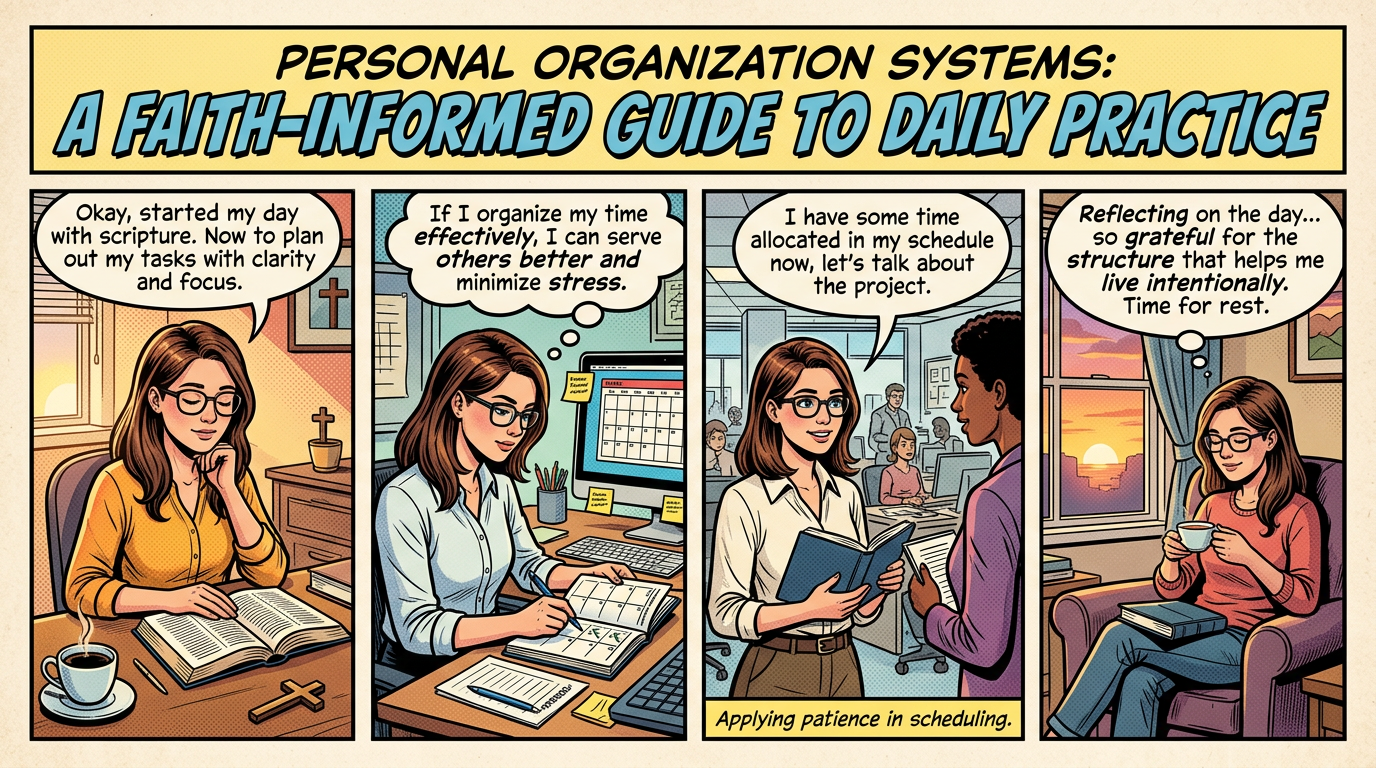
Personal organization systems can be more than methods for getting everything done. Viewed through faith, they become practices of stewardship—ways to receive time, energy, responsibilities, and relationships as gifts rather than resources to maximize.
That perspective changes the questions we ask. Instead of, “How can I fit more into this day?” we might ask, “What has been entrusted to me, and how can I give it faithful attention?” A simple plan can help us honor a promise, prepare for a difficult conversation, or make room for someone who needs care. In that spirit, Going My Way. Today invites us to consider daily movement as a journey shaped by purpose and presence.
Organization can also become spiritually unhealthy. Anxiety, perfectionism, productivity comparison, and the desire to earn our worth can quietly take over. No calendar or checklist can redeem us; our value is not measured by an empty inbox or a flawless routine.

This guide offers a gentler way forward. We will explore a simple rhythm of discernment, planning, daily action, review, and rest. Shaped by prayer and moral priorities, these practices help us serve others faithfully while receiving our limits with humility.
Begin with Discernment: Let Faith Define What Matters
Before choosing a calendar, app, or task list, begin with prayerful attention. A meaningful organization system asks what your life is for, not merely how to fit more into it. Faith helps us recognize that time is entrusted to us, not owned by us.
Urgent demands will always compete for attention. Yet worship, prayer, family, health, meaningful work, service, and community responsibilities may be quieter and more important. A message marked “urgent” may deserve an answer today, while a child’s need, a neighbor’s hardship, or a neglected spiritual practice deserves protection over time.
Discernment questions can clarify the season before you. What has been entrusted to me now? Whom am I called to serve? What am I neglecting because it is quiet rather than urgent? These questions can reveal commitments that deserve a place in your schedule before lesser tasks fill it.
Your values should become decision filters, not abstract statements. If you value family, that value may require ending work at a particular hour. If you value prayer, it may mean protecting a few quiet minutes before the day begins. If you value service, it may involve setting a boundary so your help remains generous rather than resentful.
This is why personal organization systems cannot be copied perfectly from someone else. A pastor, parent, student, caregiver, or shift worker will organize faithfulness differently. Vocation, limitations, culture, family structure, and season of life all matter.
Begin by naming three to five priorities that need protection. Then let them shape your weekly choices, including what you decline, postpone, or leave unfinished. In this way, organization becomes an expression of love, stewardship, and humility.
Build a Daily Rule of Life That Can Actually Be Kept
Once you have named what needs protection, give those priorities a daily shape. A rule of life is not a test of spiritual achievement. It is a supportive pattern of intentional practices that helps you remember who you are and how you hope to live.
A faithful daily rhythm need not be complicated. You might orient yourself in the morning with a prayer, Scripture reading, or quiet breath. Identify two or three essential responsibilities, then make room for prayer, reflection, relationships, and bodily care. Close the day by noticing where you received grace, where you struggled, and what you entrust to God.
One simple framework might look like this:
- Morning: Wake with a brief prayer and name the day’s most important priority.
- During the day: Attach small practices to existing moments, such as meals, transitions, or the end of work.
- Evening: Offer thanks, review the day honestly, and prepare gently for rest.
Anchors are often more sustainable than overfilled schedules. A prayer after brushing your teeth may last longer than an ambitious devotional plan. A nourishing meal, a short walk, or one attentive conversation can protect your humanity when personal organization systems become crowded with demands.
In demanding seasons, choose minimum viable practices. This might mean one written priority, a few words of prayer, a nourishing meal, or a brief evening examination. These small acts are not failures of devotion. They are ways of remaining connected when illness, caregiving, unexpected work, or emotional strain changes the plan.
Grace belongs inside the system, not outside it. Jesus often met people amid interruption, weariness, and unfinished work. When your rhythm breaks, return without punishment. Begin again with the next faithful step, trusting that redemption often grows through ordinary repetition rather than perfect consistency.
Use Practical Tools Without Letting Tools Become Masters
A personal organization system should reduce mental clutter, not become another source of pressure. Choose one trusted place to capture tasks, commitments, ideas, and prayerful concerns. It might be a notebook, a simple document, or an application. The particular tool matters less than knowing where your thoughts can safely land.
Keep your calendar and task list distinct. The calendar holds commitments tied to a particular time, such as a meeting, worship service, school pickup, or medical appointment. Your task list holds actions you can complete within the time and energy available. This distinction helps you see both what must happen and what can wait.
Each morning, or the evening before, choose a small number of priorities. Three is often enough. Include at least one priority connected to service, relationship, spiritual formation, or responsible care. Writing a report may matter, but calling a lonely friend or making space for prayer may also be faithful work.
Reminders can support love and responsibility when they remain servants. Use them for medication, important calls, deadlines, or recurring care. Avoid filling every moment with alerts. Too many reminders can train us to react constantly rather than attend wisely.
Digital boundaries protect this attention. Silence nonessential notifications, keep the phone away during prayer or conversation, and create technology-free moments in meals, worship, or the final hour before sleep. These practices are not rejection of technology. They are ways of honoring presence.
Set aside a weekly review. Clear or reschedule incomplete tasks, renew your priorities, and notice patterns of recurring overload. Ask gently: Does this system reflect what I say I believe? Does it leave room for people, rest, generosity, and listening? A faithful system should help you receive your limits, not conceal them.
Practice Faithful Attention in the Middle of Ordinary Tasks
A well-designed day is not simply a crowded day. Being busy means moving from one demand to another; being attentive means receiving each responsibility with care. Personal organization systems serve us best when they help us listen, keep promises, notice needs, and respond thoughtfully.
This may begin with simple practices. Single-tasking helps us give one person or responsibility our full attention. Realistic time estimates keep us from making promises built on wishful thinking. Brief pauses between tasks can become small acts of receiving the present moment, rather than rushing mentally toward the next demand.
Boundaries also belong to faithful organization. When we protect time for rest, prayer, family, or focused work, we are not merely defending our preferences. We are protecting commitments, preventing resentment, and making truthful promises possible. A clear “I cannot do that today” may be more loving than an enthusiastic promise we cannot keep.
Organization becomes an expression of love when it helps us serve people well. We might prepare before a difficult conversation, remember a friend’s medical appointment, complete work reliably, or leave margin for an unexpected need. These choices rarely look dramatic, but they can communicate dignity and trust.
Still, not every interruption is a failure. Some interruptions are responsibilities, invitations to compassion, or occasions for discernment. A child’s question, a neighbor’s crisis, or a colleague’s sincere concern may deserve our attention more than the task we planned.
The practice, then, is not rigid control. It is returning with awareness: asking what this moment requires, what love makes possible, and what faithfulness looks like here. In ordinary tasks, we learn that presence itself can become an offering.
Review, Repent, and Revise Without Shame
Review is an opportunity for truth and renewal, not a trial of your worth. At day’s or week’s end, ask: What received my attention? Where did I act with love and integrity? Where did fear, distraction, avoidance, or pride shape my choices?
These questions help personal organization systems remain humane and spiritually honest. Name failures clearly, but do not turn them into accusations. Repentance means turning again toward what is true and loving. Correction restores alignment with your values; it is not punishment for imperfect performance.
Look for patterns alongside outcomes. When did your energy rise or fade? How much emotional capacity did you have? Which obstacles kept returning? Perhaps late meetings regularly leave you unable to care well for your family, or an ambitious morning plan collapses when sleep has been poor. Such observations invite wiser, more compassionate planning.
Change one element at a time. You might adjust your morning anchor, lower your daily task limit, protect a meeting boundary, or simplify your evening review. Rebuilding everything after a difficult week often adds shame and confusion. A modest revision gives you room to learn.
Sometimes private reflection becomes either harsh or self-justifying. A trusted spiritual community, mentor, or friend can offer perspective. Someone who knows your story may help you recognize both genuine limits and avoidable patterns.
Review, then, becomes a form of faithful attention. You are not trying to become machine-like. You are learning, with grace, how your choices can better serve love, integrity, and the people entrusted to your care.
Let Organization Make Room for Faithful Living
A personal organization system cannot guarantee outcomes. It can, however, help us steward attention and effort toward vocation, love, worship, and rest.
Discern your priorities, create a flexible rhythm, use simple tools, attend to the present, and review with grace. Begin with one repeatable practice: a morning prayer and priority, a protected relationship commitment, or a brief evening review.
Consistency is not perfection. A faithful system remains adaptable, humane, and open to God’s leading and the needs of others.

Leave a Reply