
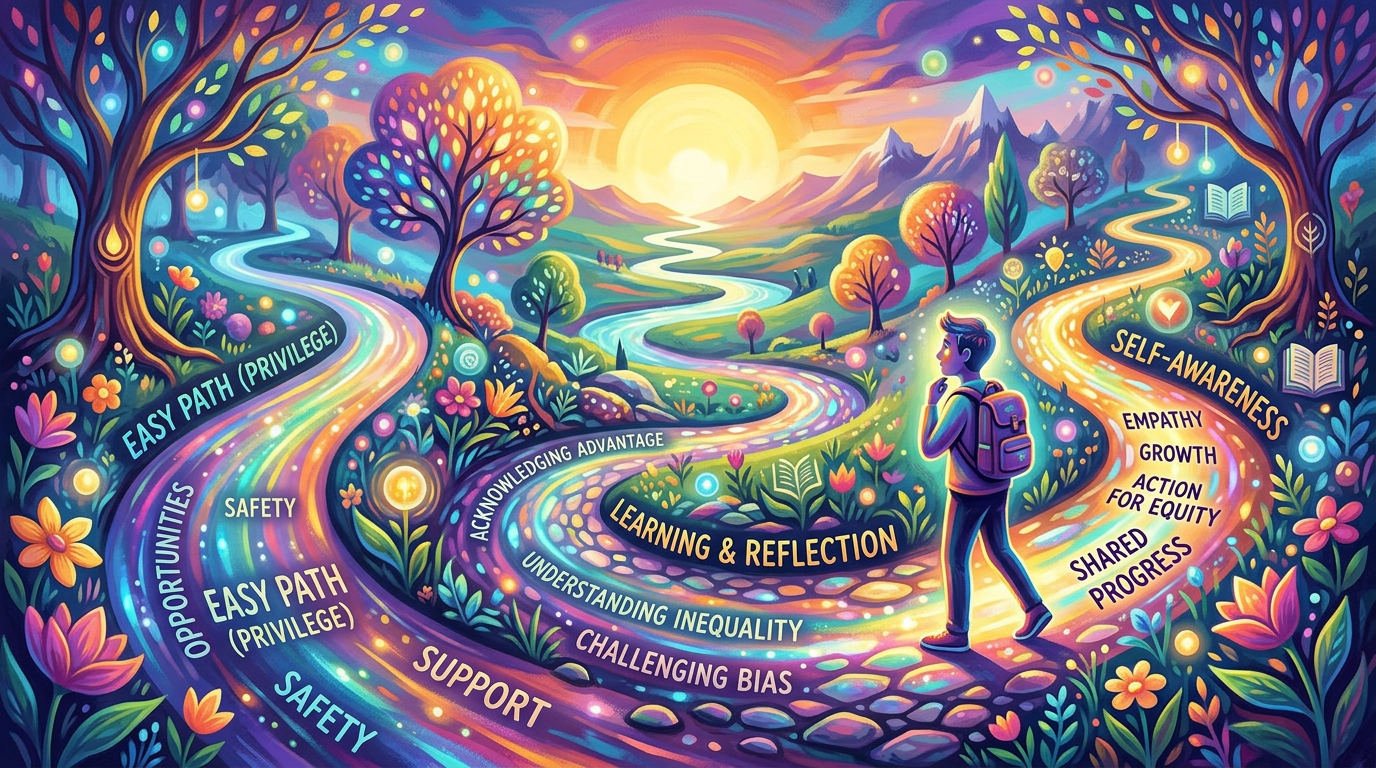
Understanding points of personal privilege can be a profound journey into self-awareness. It invites us to examine how our backgrounds, experiences, and circumstances shape our beliefs and interactions. This exploration is not just an academic exercise; it serves as a crucial step in our spiritual growth and moral development.
As we delve into our own points of personal privilege, we begin to recognize the subtle ways they influence our perspectives. For instance, someone raised in a supportive community may view challenges differently than someone who faced adversity alone. These varied experiences shape how we relate to others, often without us even realizing it.
Reflecting on our privilege encourages a deeper empathy for those whose journeys differ from our own. It opens the door to conversations about faith, love, and community, allowing us to connect on a more meaningful level. This awareness is not about guilt or shame; instead, it’s about fostering understanding and compassion.
When we truly engage with the concept of personal privilege, we can cultivate a more inclusive environment, both in our personal lives and within our broader communities. This journey isn’t always easy, but it is essential for deepening our connections and enriching our spiritual lives.
- Defining Points of Personal Privilege
Understanding points of personal privilege begins with recognizing that privilege isn’t a one-size-fits-all concept. It spans various dimensions, including social, economic, and spiritual aspects. Each of us navigates life through a unique lens shaped by our experiences and circumstances.
Social privilege often relates to the advantages we have based on factors like race, gender, or sexual orientation. For instance, someone who identifies as a white, cisgender male may encounter fewer barriers in professional settings compared to others who face systemic discrimination. This doesn’t diminish their individual struggles but highlights how societal structures can create uneven playing fields.
Economic privilege is another layer. Those with financial stability often have access to resources that can propel them forward—like quality education and healthcare. Reflecting on our economic status invites us to consider how our financial background influences our opportunities and choices. It’s a chance to recognize that not everyone starts from the same place.
Then there’s spiritual privilege, which can manifest in the freedom to practice one’s faith openly or the comfort of belonging to a supportive community. This aspect often goes unnoticed but can significantly impact our sense of belonging and identity. For example, individuals who can openly express their spirituality may not face the same challenges as those whose beliefs are marginalized.
To truly understand our points of personal privilege, we must cultivate a consciousness that encourages self-reflection. This means asking ourselves tough questions: What advantages do I enjoy that others might not? How do these privileges shape my worldview? Engaging with these inquiries fosters empathy and connection, allowing us to appreciate the intricate tapestry of human experience.
- The Impact of Personal Privilege on Worldview
Personal privilege doesn’t just exist in a vacuum; it deeply influences our perspectives on faith and morality. When we have certain advantages—be it economic stability, education, or social connections—it can create blind spots in our understanding of the world. For instance, someone who has always had access to quality healthcare may struggle to comprehend the frustrations and fears of those who don’t. This disconnect can lead to assumptions that overlook the struggles of others.
Consider a story that many of us can relate to. Imagine two friends discussing their views on charity. One friend, raised in a supportive environment, may see giving as a natural extension of their privileges. They might believe that hard work alone determines success, leaving them unaware of systemic barriers others face. The other friend, who has experienced hardship, may see charity as a lifeline—something essential rather than optional. This difference in perspective illustrates how points of personal privilege can shape our beliefs and values.
Engaging with our privilege requires humility. It invites us to listen to stories different from our own—to seek understanding rather than judgment. When we approach conversations about faith and morality with an open heart, we allow ourselves to see beyond our experiences. This broadened perspective encourages empathy, reminding us that our values are often shaped by our circumstances.
By acknowledging our personal privileges, we can foster a culture of inclusion. We create space for others’ voices, enriching our own understanding of faith and morality. In doing so, we not only deepen our connections but also step into a larger narrative that recognizes the struggles and triumphs of the human experience.
- Navigating Relationships with Awareness
In faith-based communities, relationships thrive on mutual respect and understanding. Here, self-awareness plays a crucial role in how we interact with one another. Recognizing our points of personal privilege can illuminate the dynamics of these relationships, helping us see where we may unintentionally overshadow others.
Active listening is a cornerstone of this awareness. When we engage in conversations about privilege, it’s essential to listen more than we speak. This means setting aside our own experiences for a moment and truly hearing the stories of others. For instance, if a friend from a marginalized background shares their struggles, it’s not just about acknowledging their pain but also understanding how our privileges might have shaped our own experiences differently.
Empathy is equally important. It allows us to connect on a deeper level. Imagine attending a community gathering where everyone shares their stories. If one person feels unseen or unheard, it can create a rift. By fostering an environment where everyone feels valued, we invite diverse perspectives that enrich our collective experience.
Creating inclusive spaces isn’t just about avoiding conflict; it’s about celebrating diversity. When we acknowledge our privileges and actively work to uplift others, we contribute to a culture where everyone feels safe to express themselves. For example, in a discussion about community service, recognizing the different life experiences of participants can lead to more thoughtful and effective outreach efforts.
As we navigate our relationships, let’s remember that awareness is a continuous journey. By practicing active listening and empathy, we not only enhance our connections but also cultivate a nurturing environment where faith, love, and community can truly flourish.
- Transforming Personal Privilege into Positive Action
Awareness of our points of personal privilege invites us to act, not just reflect. This action can take many forms, but the core idea remains the same: channeling our privilege into advocacy and support for marginalized voices. When we recognize the advantages we hold, we can choose to amplify those who may not have the same platform. This means actively listening to their stories and learning from their experiences.
Consider the power of community service. Volunteering your time, skills, or resources can create meaningful change. For example, if you have access to education, consider mentoring someone who lacks that opportunity. Your guidance can empower them and, in turn, enrich your own understanding of the world. This reciprocal relationship illustrates how privilege can transform into a powerful instrument for good.
Integrating lessons of privilege into our personal spiritual practice can also be a profound way to foster positive action. Many spiritual traditions emphasize compassion and service to others. Reflecting on your own journey can deepen your faith and inspire you to serve those in need. For instance, prayer or meditation might guide you toward specific actions, helping you become more attuned to the struggles of others.
Additionally, sharing stories from your life that highlight moments of privilege can open up conversations in your community. By being vulnerable and honest, you create a space for dialogue. This not only educates but also encourages others to reflect on their own privileges. When we share our journeys, we invite others to join us in the pursuit of justice and equity.
Ultimately, transforming personal privilege into positive action is about recognizing our interconnectedness. Every small step we take in support of others contributes to a larger movement toward inclusivity and understanding. As we commit to this path, we not only uplift others but also enrich our own lives, creating a community rooted in love and empathy.
- Reflecting on Personal Growth and Moral Responsibility
When we begin to understand our points of personal privilege, we also open the door to profound self-reflection. This reflection is not merely about recognizing our advantages; it invites us to consider how these privileges shape our choices and moral responsibilities. Self-awareness becomes a vital tool in this journey. It allows us to critically assess our actions and their impact on others.
Take, for example, a moment when you were faced with a decision that could affect someone less privileged. Perhaps you had the choice to speak up when you witnessed an injustice, or maybe you hesitated out of fear or discomfort. In that moment, your awareness of your privilege—be it economic, social, or cultural—can guide you toward a more ethical decision. It’s about understanding that your voice carries weight and that your actions can either perpetuate or challenge existing disparities.
Faith often plays a pivotal role in this moral landscape. Many spiritual traditions emphasize the importance of serving others and lifting those who are marginalized. Reflecting on our privileges can deepen our connection to these values, urging us to act with compassion and integrity. It brings to light the teachings of love and responsibility, compelling us to consider how we can make a difference in our communities.
As we engage in this reflective process, it’s crucial to acknowledge that growth is not linear. We may stumble or misjudge our privilege at times, but each misstep can be a learning opportunity. By embracing our moral responsibility, we begin to weave a richer narrative—one that honors our shared humanity and seeks to uplift those around us. This journey of reflection not only fosters personal growth but also strengthens the moral fabric of our communities.
Conclusion: Embracing the Journey of Self-Awareness
Understanding our points of personal privilege is more than a task; it’s a transformative journey. This journey opens the door to self-awareness, inviting us to reflect deeply on our experiences and the advantages we may unknowingly hold. As we engage in this process, we cultivate empathy and a greater sense of moral responsibility toward others.
Let’s remember that self-awareness isn’t a destination but an ongoing dialogue. Within our communities, these conversations can spark profound changes. When we share our insights and listen to others, we create an inclusive environment where everyone feels valued and heard.
Moreover, acknowledging our privileges can lead to spiritual growth. It allows us to see the world through a more compassionate lens, which can guide our actions and interactions. Each step we take towards understanding our privileges not only uplifts those around us but enriches our own lives as well.
As we continue on this path, let’s commit to fostering an atmosphere of love, understanding, and support. Together, we can inspire each other and create a more inclusive community, one reflective conversation at a time.

Leave a Reply