

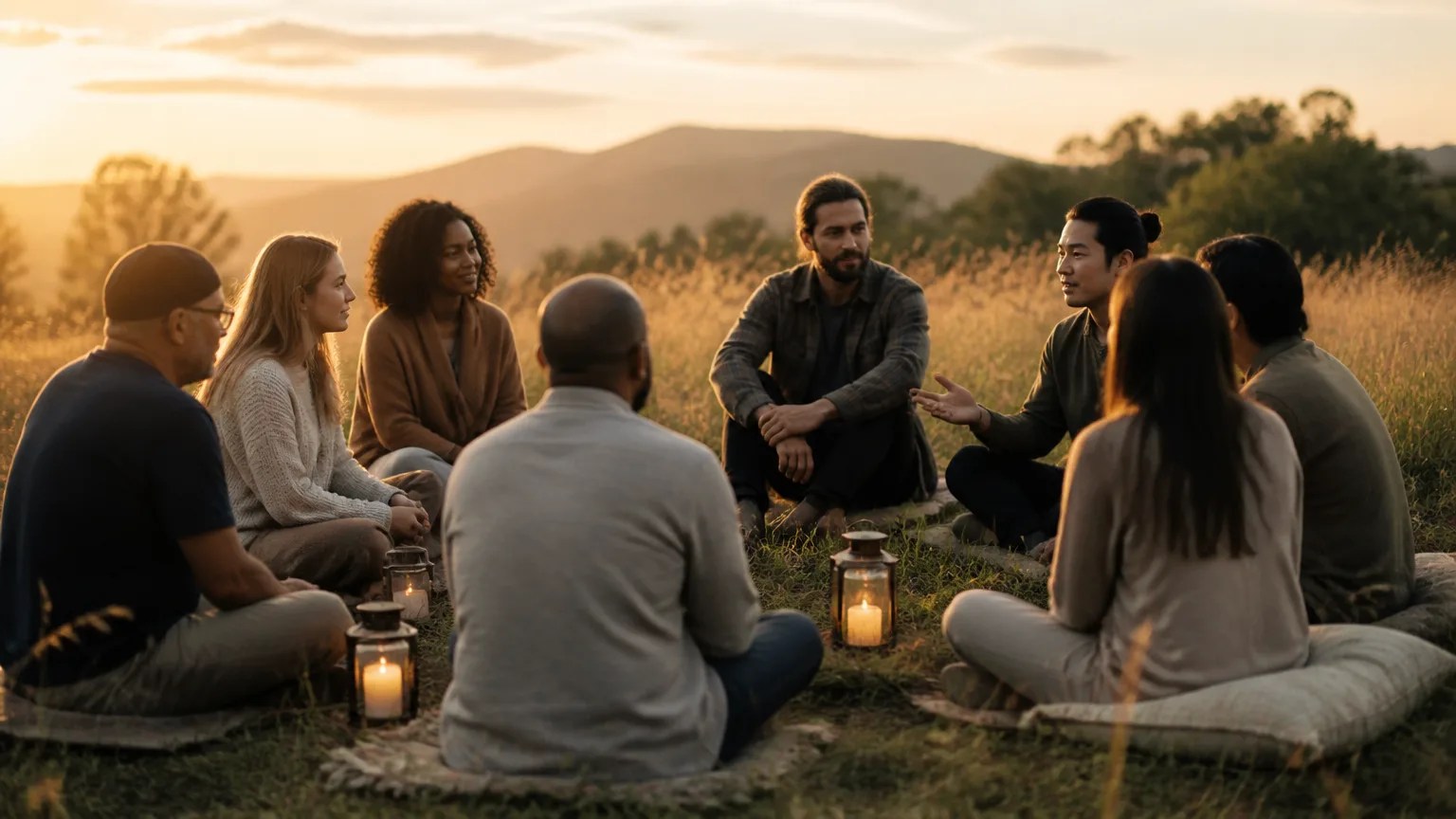
When we ask, “what is spiritual community,” we are touching a deeply human desire: to seek purpose and practice faith alongside others. Such a community may gather in a congregation, small group, online space, service organization, or informal circle of friends.
It is more than a group that shares religious beliefs. A spiritual community is a network of relationships shaped by shared meaning, worship, moral reflection, and mutual care. In these relationships, people ask honest questions, celebrate moments of grace, and find support during seasons of doubt or loss.
Belonging matters because spiritual growth rarely happens in isolation. Whether a community is religious, interfaith, or rooted in a nontraditional spiritual path, it depends on the patient work of listening, forgiving, welcoming, and showing up. In this article, we will explore both the faith we share and the relationships that help a healthy community take root.
Defining a Spiritual Community Through Shared Meaning
So, what is spiritual community? It is a group of people gathered around a shared pursuit of the sacred, moral truth, personal transformation, or connection with something greater than themselves. Unlike an ordinary social group, its relationships are shaped by meaning, purpose, and a desire to grow together.
Every spiritual community develops a common language. Prayer, meditation, worship, study, storytelling, and shared rituals help members express what they value. Ethical commitments—such as compassion, justice, forgiveness, or service—give those values a practical form in daily life.
Shared faith does not require complete agreement. One person may feel certain about God, while another is still asking honest questions. A healthy community makes room for both, recognizing that doubt and discovery can belong within a faithful life.
What matters most is a shared direction and a sense of belonging. Members listen, learn, and support one another through change. Over time, these relationships can become a living reminder that spiritual growth is not only a private journey.
How Relationships Become the Heart of Spiritual Life
To ask, “What is spiritual community?” is to look beyond shared ideas or regular attendance. A true community helps people feel known, welcomed, and valued. Belonging matters most during doubt, grief, transition, or moral uncertainty, when faith may feel fragile.
These relationships grow through ordinary practices. Attentive listening can make room for an honest question. A shared meal can soften distance between strangers. Small-group conversations, mentorship, and compassionate presence turn abstract beliefs into lived relationships.
I remember how a simple check-in once carried more comfort than a polished answer. Someone listened without rushing to explain my pain. That moment reminded me that encouragement often begins with presence, not advice.
Healthy spiritual friendship also includes accountability. People can challenge one another toward forgiveness, courage, and integrity while still honoring freedom. This is different from control, shame, gossip, or pressure to conform. Trust allows us to speak truth with kindness and receive it without fear.
Over time, these patterns shape faith and character. Members learn to celebrate one another’s growth, repair harm, and remain present through change. In this way, spiritual life becomes something practiced together—not a private belief system, but a shared way of loving.
Building Shared Faith Through Practice and Service
Shared faith grows stronger through repeated practices, not conversation alone. Worship, prayer, sacred reading, reflection, confession, meditation, and gratitude create continuity. Over time, these rhythms help members embody their values together and recognize that spiritual growth unfolds through ordinary days.
Service gives those beliefs a human face. A community might volunteer at a food pantry, organize mutual aid, advocate for neighbors, or care for someone facing illness. These acts of love turn compassion, forgiveness, and justice from ideas into habits. They also remind us that what is spiritual community if it does not shape how we treat people beyond its gathering place?
Participation should remain accessible and varied. Some members may lead worship or coordinate a project, while others offer transportation, write encouragement, prepare meals, or join quietly when they can. Flexible roles welcome newcomers, busy members, older adults, and people with differing abilities. When everyone has a meaningful way to contribute, shared faith becomes a lived practice of belonging.
Creating an Inclusive and Healthy Spiritual Community
A healthy spiritual community begins with clear values and transparent leadership. Members should understand how decisions are made, how money is handled, and whom to approach with questions or concerns. Trust also grows through respectful communication, confidentiality, safeguarding, and reliable pathways for reporting harm.
Inclusion requires more than welcoming language. Communities must consider culture, race, gender, age, disability, economic circumstances, religious background, and differing levels of belief. A person who doubts, worships differently, or cannot afford regular participation should still find dignity and belonging.
Healthy boundaries protect relationships rather than limiting them. Leaders must welcome accountability, avoid misuse of authority, and respect each person’s privacy and consent. Clear expectations help members recognize the difference between spiritual care and control.
Disagreement is inevitable, even among people who share faith. Yet conflict can become spiritually productive when members practice humility and curiosity, speak honestly, and maintain principled boundaries. When harm occurs, the community should name it, seek repair, and make changes. This is part of what is spiritual community at its best: a place where forgiveness is practiced without ignoring justice.
Growing Together in Faith and Relationship
So, what is spiritual community? It is more than a building, institution, or label. It is belonging shaped by shared meaning, trustworthy relationships, moral concern, mutual care, and consistent action.
In such a community, faith becomes visible through listening, forgiveness, welcome, and repair. We grow not by avoiding difference or difficulty, but by meeting both with honesty and compassion.
Consider where you might offer honest presence, receive support, and help create a community where faith is explored and lived with integrity.

Leave a Reply