

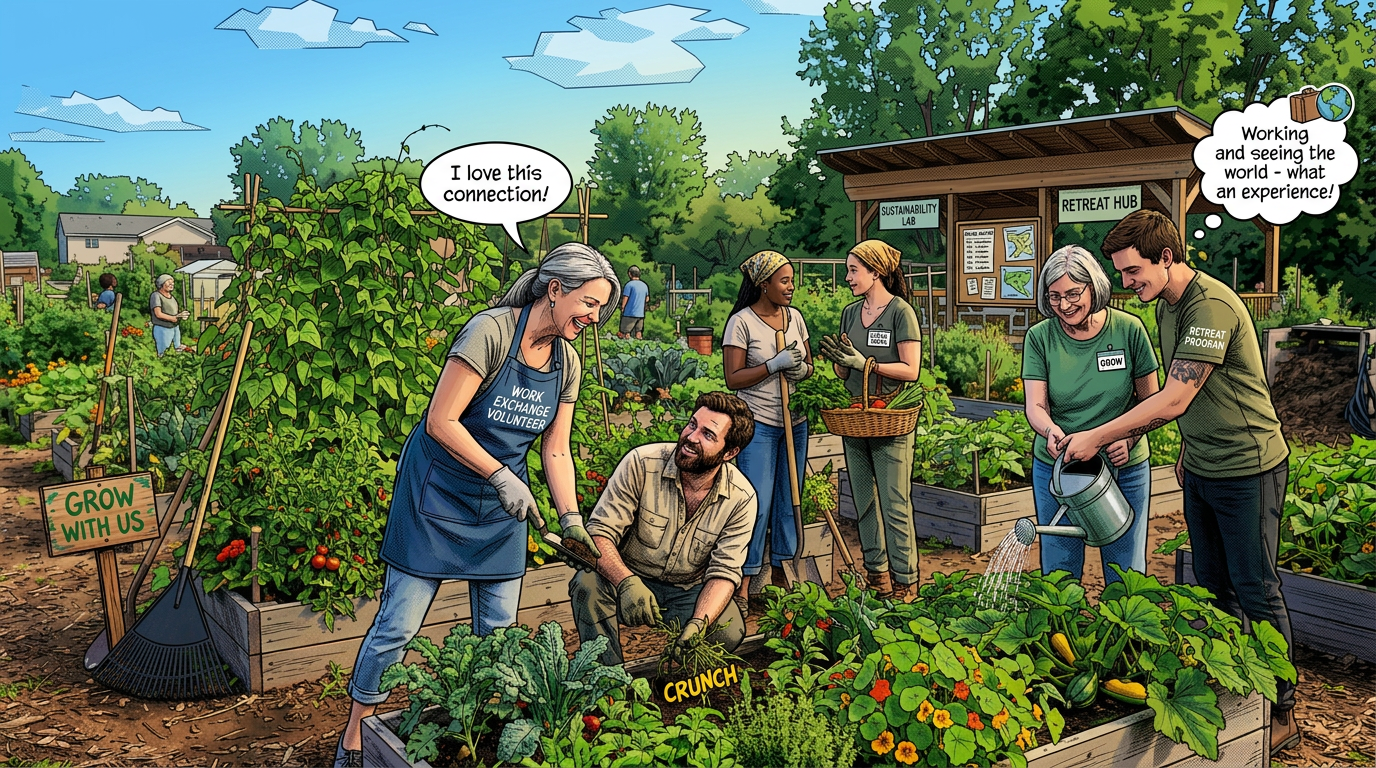
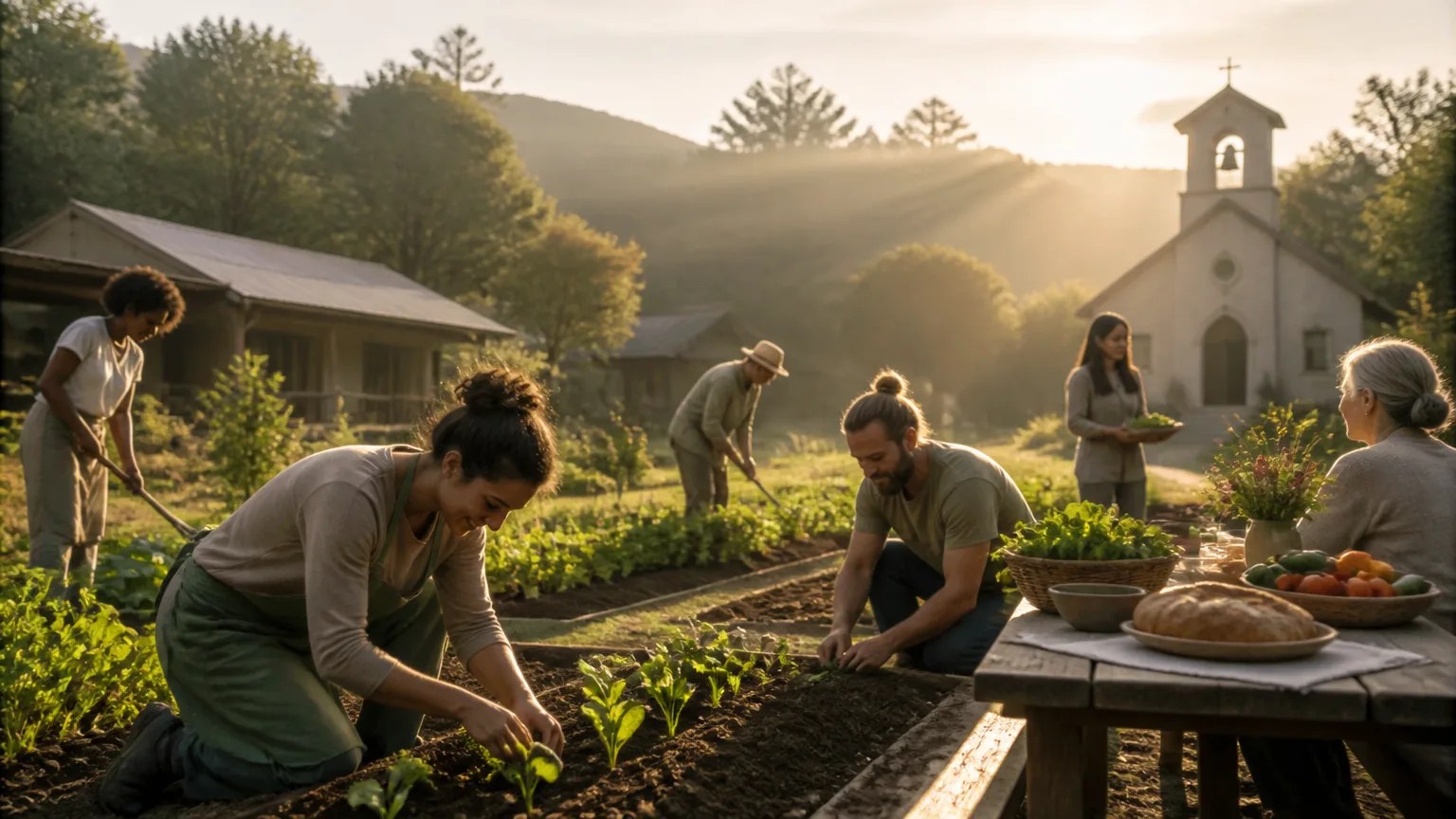
Work exchange spiritual retreats invite us to see service in a new way. Participants may trade gardening, cooking, maintenance, or hospitality for lodging, meals, and shared experiences. Yet these retreats offer more than affordable travel or volunteer work. They create intentional space to examine our beliefs, values, moral choices, and relationships with others.
A morning spent tending a community garden can become a quiet lesson in patience and responsibility. An evening meal may open conversations about forgiveness, faith, or the struggles we carry. In these ordinary moments, practical service and spiritual growth begin to strengthen one another.
Some retreats welcome people seeking Christian community, while others encourage interfaith dialogue or provide space for personal discernment. What connects them is not a checklist of religious activities, but a shared willingness to listen, contribute, and reflect. As we explore this connection between service, faith, and community, we will see how simple acts of care can lead to deeper questions—and, sometimes, meaningful transformation.
Service Turns Spiritual Ideas Into Daily Practice
Shared work gives spiritual values somewhere to live. In work exchange spiritual retreats, participants may garden, cook meals, repair buildings, support ecological projects, welcome guests, or help with community outreach. Each responsibility responds to a real need within the host community.
A morning spent weeding can teach stewardship more honestly than a conversation about caring for creation. Preparing dinner can become an exercise in hospitality, especially when the cook notices who needs a nourishing meal or a place at the table. Maintenance work may seem ordinary, yet it protects the shared space where people rest, pray, and gather.
Service also challenges our abstract beliefs. It asks us to practice patience when plans change, cooperation when opinions differ, and consistency when the work feels unnoticed. I have found that carrying out a small task faithfully can reveal more about humility than making a confident promise to live humbly.
These experiences also invite important moral questions. Who benefits from the labor? How are responsibilities distributed? Are participants learning and contributing freely, or are they being asked to fill essential roles without proper support? Service becomes mutually respectful when expectations are clear, working conditions are fair, and the host community’s voice remains central.
Not every chore becomes meaningful simply because it happens at a retreat. Spiritual meaning grows through intention and relationship. Washing dishes can be an act of care when it expresses gratitude for the people sharing the meal, but it can also remain merely a chore.
That distinction matters. Reflection, honest conversation, and attention to one another help participants connect daily work with faith. Over time, service can become less about performing goodness and more about joining a community with responsibility, compassion, and open hands.
Faith Finds Space in Retreat Rhythms
A retreat’s rhythm can make room for questions that everyday life often pushes aside. Shared meals, work periods, silence, prayer, study, and rest create a steady pattern. Within that pattern, participants may begin noticing their thoughts, habits, doubts, and hopes more clearly.
Many work exchange spiritual retreats begin with a simple morning practice. This might include prayer, meditation, a sacred-text reading, or a few quiet minutes before the day’s work begins. Later, a contemplative walk or private journaling can help someone listen inwardly without needing to solve every question at once.
Shared learning can deepen that reflection. A group might discuss scripture, another sacred tradition, or a theme such as forgiveness, justice, or redemption. Evening reflection may invite guests to name something they received, something they struggled with, or someone they encountered with greater compassion.
These practices will not look the same for everyone. One participant may be seeking a deeper commitment to a familiar faith. Another may be processing uncertainty, grief, or disappointment. Someone else may be exploring spiritual questions for the first time. A Christian might find connection through communal worship, while another guest may prefer meditation, silence, or time in nature.
This diversity does not have to divide the community. Faith can be expressed through different languages and traditions while still making space for humility, gratitude, and care. The essential practice is not agreement, but respectful attention.
Consent and openness matter throughout the retreat. Spiritual activities should be clearly explained and offered as invitations, never requirements. Guests need room to participate fully, observe quietly, or choose another form of reflection. When no one is pressured to adopt a particular belief, the retreat becomes safer for honest questions—and more welcoming to genuine faith.
Community Makes Spiritual Growth Relational
A retreat can begin as a private search for renewal, but shared life quickly makes spiritual growth relational. In work exchange spiritual retreats, people often discover that faith is shaped not only through prayer, but through trust, cooperation, and ordinary attention.
Shared work and meals create repeated opportunities to listen. Around a table or garden bed, participants may hear different life experiences, denominations, cultures, and interpretations of faith. A simple conversation about someone’s home, grief, or hope can widen our understanding more than a formal lesson.
Over time, honest questions naturally emerge. What gives our lives purpose? How should we respond to suffering or injustice? What does forgiveness require? Conversations about vocation and ethical decisions can deepen spiritual insight because they connect belief with real choices.
Community also offers encouragement and accountability. Someone notices when we are discouraged, invites us back into the work, or gently asks whether our actions reflect our values. Yet communal life is not always comfortable. Disagreement exposes our assumptions and calls for humility, patience, and careful communication.
I have often found that the most meaningful conversations happen after a misunderstanding. When people listen without rushing to defend themselves, conflict can become an opportunity for moral formation. Participants learn that reconciliation is not avoidance; it is the patient work of seeking truth while preserving one another’s dignity.
Healthy retreats make this growth possible by establishing clear boundaries and inclusive expectations. They explain responsibilities, provide ways to address conflict, and ensure that no one is pressured to disclose more than they wish. They also protect space for solitude, recognizing that even generous community can become overwhelming without rest.
In this setting, hospitality becomes more than welcoming guests. It becomes a shared practice of making room—for different convictions, honest questions, necessary silence, and the slow work of becoming more compassionate together.
The Mutual Exchange: Receiving as Well as Giving
In a healthy work exchange spiritual retreat, service moves in both directions. Participants may offer cooking, gardening, cleaning, maintenance, or hospitality. In return, they receive food, accommodation, instruction, mentorship, friendship, and a renewed sense of belonging.
Receiving can feel more difficult than giving. Many of us prefer to appear capable and independent. Yet spiritual growth often begins when we admit our need for others. Accepting a warm meal, patient guidance, or a safe place to rest can become an act of gratitude and vulnerability.
This exchange reflects a deeper truth: no person grows alone. Hosts offer knowledge and care, while participants bring energy, attention, and fresh perspective. In the best work exchange spiritual retreats, these gifts meet through interdependence rather than debt. Each person remains worthy of dignity, even when their roles are different.
Still, not every arrangement is genuinely reciprocal. Before committing, ask whether the retreat clearly explains work hours, duties, time off, accommodations, and safety practices. It should also name its religious or philosophical commitments. Participants deserve enough information to decide freely, without pressure or surprises.
Fairness requires more than providing a bed and meals. Hosts must consider physical demands, accessibility, privacy, and the power they hold over guests’ housing and daily lives. Participants, meanwhile, should communicate honestly about their abilities, boundaries, and needs.
When expectations are transparent, service becomes an invitation rather than disguised labor. A participant can contribute wholeheartedly without surrendering their well-being. A host can offer care without treating hospitality as a favor that must be repaid endlessly.
This balance creates room for gratitude on every side. Giving becomes less about proving goodness, and receiving becomes less about shame. Together, they practice a community shaped by humility, responsibility, and mutual care.
From Retreat Experience to Lasting Moral Practice
When a work exchange spiritual retreat ends, the most important question may not be, “What changed forever?” It may be, “What kind of person, neighbor, believer, or community member do I want to become?” The retreat can offer clarity, renewed questions, or one small next step rather than a complete spiritual answer.
Communal work often makes ordinary choices feel newly visible. A participant might continue volunteering locally, simplify their consumption, practice hospitality, repair a strained relationship, or support a neighborhood project. These actions need not be dramatic. Their value may come from choosing them with greater attention and responsibility.
The retreat can also leave behind discomfort. Perhaps a disagreement exposed assumptions about faith, leadership, privilege, or whose labor is noticed. Rather than dismissing that tension, participants can ask what it reveals and what deserves further examination. Honest reflection turns friction into a possible source of wisdom.
Returning home, people might set aside regular time for prayer, journaling, or conversation with trusted friends. They can revisit the retreat’s lessons without trying to recreate its intensity. In this way, service and community become practices to discern and renew, not achievements to display.
A Shared Life of Service, Faith, and Belonging
The power of work exchange spiritual retreats lies in their integration, not any single activity. Work gives faith a tangible form, while prayer, reflection, and honest conversation deepen the meaning of work. Community makes both sustainable by sharing responsibility, offering encouragement, and honoring mutual dependence.
Spiritual growth often unfolds through ordinary acts of care: preparing a meal, repairing a garden bed, listening without judgment, or welcoming a difficult question. These small practices can lead to forgiveness, redemption, and a more grounded life of service. As you consider your own convictions, where might you connect faith with meaningful work and a community willing to grow together?

Leave a Reply