

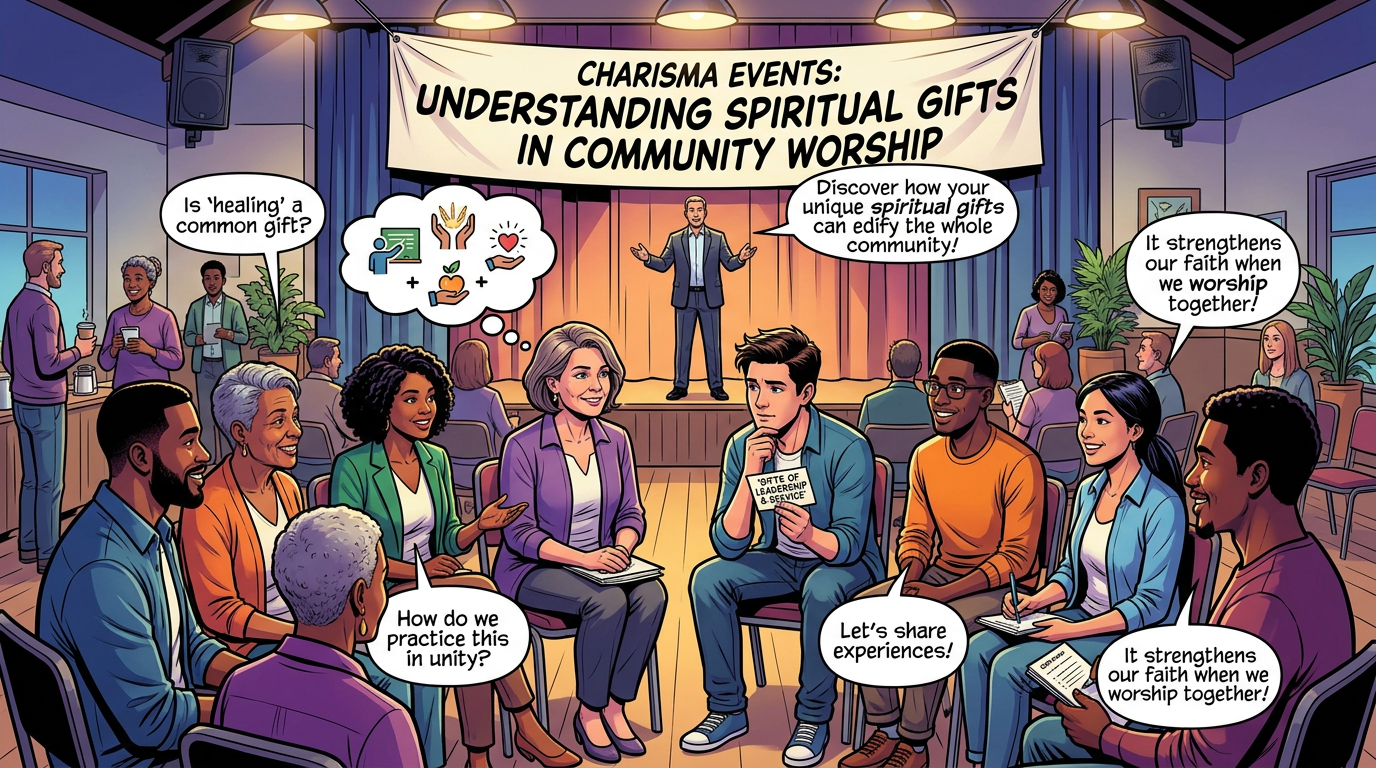
Charisma events invite people to gather for prayer, worship, and the shared experience of spiritual gifts. Here, “charisma” does not mean personal charm or public influence. It refers to a grace, or gift, given by the Holy Spirit for the good of others.
In these gatherings, someone may offer a word of encouragement, a prayer for healing, a song, or a quiet insight. Such gifts are not treated as performances. They are received within community, tested with care, and practiced with humility and love.
Christian traditions understand charisma events in different ways. Some connect them with Pentecostal or charismatic worship, while others recognize spiritual gifts through more structured forms of prayer and service. Across these differences, the central questions remain familiar: How do we listen for God? How do we care for one another? And how can discernment protect both the giver and the community?
This article explores the theological meaning and practical place of charisma events, showing how prayer, worship, spiritual gifts, and responsible community life can meet.
Defining Charisma Events and Their Place in Christian Worship
Charisma events are gatherings centered on the active work of the Holy Spirit and the spiritual gifts given for the good of the community. The word charisma comes from the Greek word for grace or gift. In practice, these events create space for believers to worship, pray, listen, and respond together.
A gathering might begin with congregational singing, followed by teaching, testimony, or a time of intercession. Participants may pray spontaneously, sit in silence, or share words they believe could encourage someone else. There may also be opportunities to receive prayer, reflect quietly, or respond to a spiritual prompting with humility and care.
The format varies widely. A parish prayer meeting may feel different from a renewal conference, retreat, or small-group gathering. Some charisma events take place within an ordinary worship service, while others are organized as special evenings of prayer and discernment. No single schedule or style defines them all.
What unites these gatherings is not a dramatic atmosphere, but a shared desire to seek God and serve one another. A charisma event is not meant to be a performance or an emotionally impressive experience. Its purpose is communal worship, attentive listening, and openness to the Spirit’s work.
In this way, charisma events can complement ordinary Christian worship. Sunday services, daily prayer, and communion provide a steady rhythm for the church, while renewal gatherings or retreats may offer extended space for reflection. Together, these forms of worship invite believers to grow in faith, practice discernment, and recognize that spiritual gifts are given for love, encouragement, and the building up of the community.
Understanding Spiritual Gifts: What “Charismata” Means
The word charismata comes from the Greek word charis, meaning grace or gift. In the New Testament, spiritual gifts are described as ways God’s grace becomes visible through the life of the community. Paul names gifts in passages such as Romans 12, 1 Corinthians 12, and Ephesians 4.
These gifts may include teaching, service, encouragement, leadership, healing, prophecy, discernment, wisdom, knowledge, and tongues. Some appear through words, while others emerge through practical care. A person who organizes meals, comforts someone in grief, or explains Scripture clearly may be offering a spiritual gift.
In community worship, participants might encounter these gifts in familiar and unexpected ways. A sermon may bring insight to a difficult season. A prayer for healing may offer courage, whether or not physical healing follows. During a gathering, someone may sense a timely word, while others help the community discern its meaning with patience and care.
Charisms are not spiritual trophies. They are not evidence that one person is more holy, more mature, or more favored than another. Nor are they rewards for reaching an advanced level of faith. They are graces given for the strengthening of the whole body, especially where comfort, wisdom, or practical help is needed.
Christian traditions interpret particular gifts differently. Some welcome tongues and prophecy as regular parts of worship. Others understand them more cautiously or emphasize gifts expressed through teaching and service. Yet many traditions share an important measure: gifts should lead toward love, humility, truth, and service.
This is why charisma events often include prayer, shared reflection, and pastoral guidance. A gift is not meant to place one person above the community. It invites responsibility toward others. When spiritual gifts create compassion, encourage forgiveness, and build trust, they can become a genuine expression of grace in communal worship.
How Spiritual Gifts May Appear During a Charisma Event
During charisma events, spiritual gifts may appear in ways that are quiet and familiar. Someone might comfort a grieving person, offer wise counsel, organize meals for a family, or teach Scripture clearly. Another person may serve through steady prayer, welcoming strangers, or noticing who feels overlooked.
More visibly charismatic practices can also occur. Participants may pray in tongues, offer a song, speak words they believe bring encouragement, or share a perceived word of knowledge. These expressions can be meaningful, but they are not required signs of spiritual maturity. A gathering may be deeply faithful even when no dramatic experience takes place.
When someone believes they have received a prophetic impression, it should be offered with humility. Phrases such as “I wonder whether this might speak to you” leave room for freedom and discernment. Prophecy and words of knowledge should be weighed against Scripture, wise pastoral care, and the community’s shared understanding.
No individual should treat a spiritual impression as unquestionable private authority. A healthy community listens carefully, asks honest questions, and protects people from pressure. This process is not meant to extinguish faith. Instead, it helps distinguish encouragement from assumption and genuine care from personal influence.
Emotions may also become part of worship. Tears, silence, laughter, bodily responses, deep joy, or a strong sense of peace can hold personal meaning. Yet feelings alone do not prove the source or truth of an experience.
For this reason, discernment includes what happens afterward. Does the experience lead toward love, humility, forgiveness, and responsible action? Does it strengthen trust and make room for others? These questions help a community receive spiritual gifts gratefully while remaining grounded, compassionate, and open to continued reflection.
Discernment, Order, and Healthy Community Worship
The questions we ask after a spiritual experience also guide how we prepare for it. In charisma events, discernment begins with Scripture, prayer, and careful attention to the community’s core beliefs. Pastoral oversight and communal wisdom help ensure that personal impressions are tested with humility rather than accepted automatically.
Healthy discernment also considers ethical fruit. Does a prayer, prophecy, or healing claim lead toward love, forgiveness, truth, and service? Does it respect people’s freedom and dignity? Experiences that produce fear, control, shame, or dependence require careful examination, even when they appear spiritually powerful.
Leaders have a particular responsibility to create clear boundaries. Public prayer should honor consent, especially when touch, personal information, or emotional vulnerability is involved. Prophetic words and healing claims should never be presented as guaranteed outcomes or used to replace medical, professional, or pastoral care.
Confidentiality matters, too. People may share grief, illness, trauma, or doubts during worship. Leaders should explain how such information will be protected and provide support for anyone who becomes distressed. A trusted pastoral team can offer quiet care, appropriate referrals, and time for people to recover their balance.
Order does not suppress the Spirit. Thoughtful structure can protect participants, prevent manipulation, and keep attention focused on worship rather than personalities. Clear guidance about who may speak, how prayer is offered, and when leaders intervene creates room for gifts to serve the whole community.
This kind of accountability is not a lack of faith. It reflects the belief that spiritual gifts are given for shared flourishing, not private status. When charisma events remain open to correction, grounded in love, and connected to the wider faith community, they can encourage freedom without abandoning wisdom.
Participating in a Charisma Event with Openness and Wisdom
For someone attending a charisma event for the first time, a little preparation can bring peace. Learn the gathering’s purpose, whether it centers on healing prayer, worship, testimony, or spiritual gifts. You might begin by observing quietly before participating, noticing how leaders guide the community and how people respond.
Join in prayer at a level that feels honest and comfortable. You may sing, remain silent, bow your head, or simply listen. There is no need to force an emotion or imitate another person’s response. If something is unfamiliar, ask a trusted leader afterward. Healthy communities welcome sincere questions and explain their practices with patience.
Regular participants also carry a responsibility to protect the freedom of others. No one needs to display a dramatic gift to belong, and spiritual growth cannot be measured by visible intensity. A person’s quiet prayer, faithful presence, or willingness to serve may express grace just as deeply.
It can help to reflect on the event over time. Did the experience lead to greater love, humility, courage, or compassion? Did it strengthen a commitment to forgiveness, service, and care for neighbors? These lasting signs often matter more than what felt powerful in the moment.
Like the earliest Christian communities, believers can make room for wonder while practicing wisdom. Openness does not mean accepting every claim without discernment. It means remaining receptive to God’s work while staying grounded in Scripture, trusted guidance, mutual respect, and the everyday responsibilities of faith.
Charisma Events as Practices of Shared Faith and Service
Charisma events create space for prayerful openness, but their fruit extends beyond worship. Spiritual gifts matter most when they inspire compassion, service, reconciliation, and care for others afterward.
Discernment keeps these gatherings grounded in love, humility, and accountability. Approach them with curiosity and spiritual freedom, while respecting Scripture, wise guidance, and the wider community’s shared wisdom.

Leave a Reply