

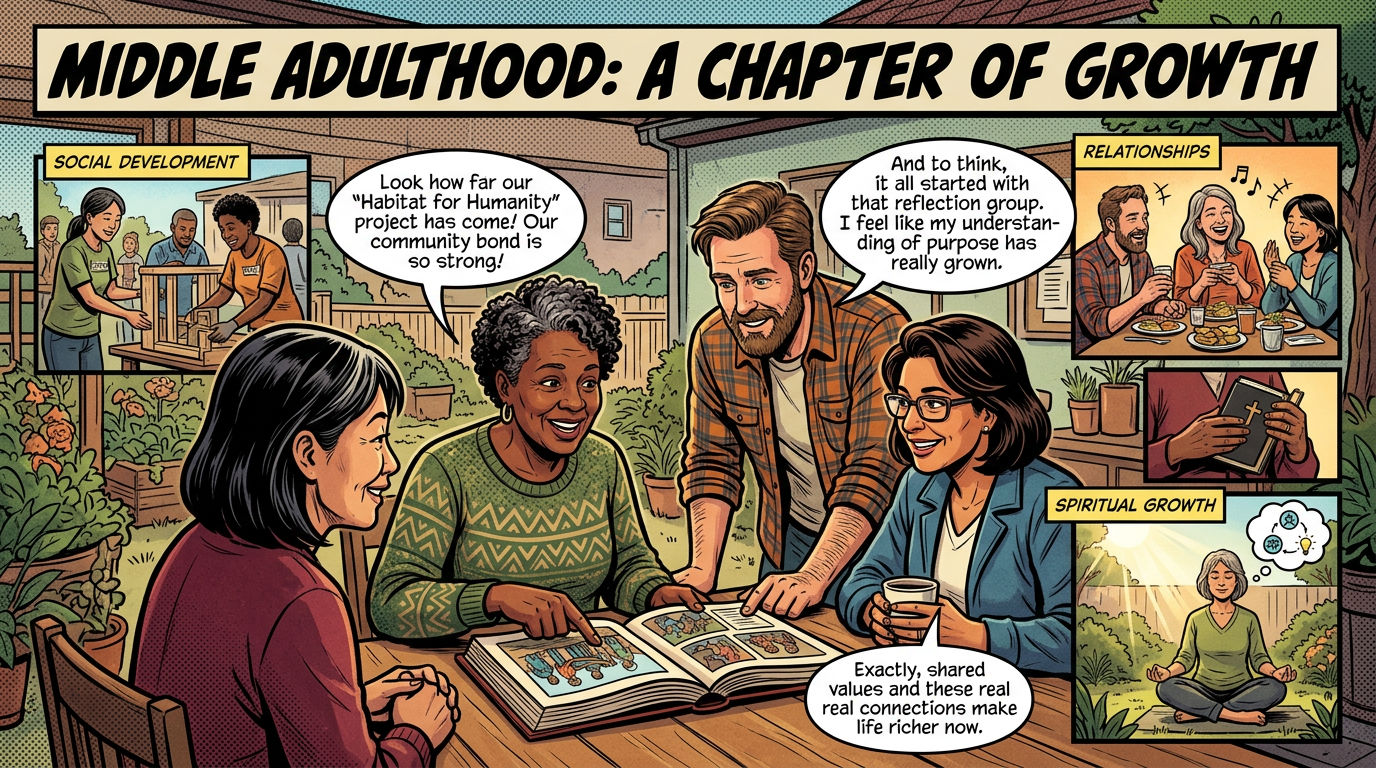
Middle adulthood can bring a quiet question to the surface: What matters most in the life I am building? For many, middle adulthood: social development takes shape through changing responsibilities, deeper commitments, and choices about where to offer time and care.
There is no single timetable for these changes. Culture, health, family circumstances, and personal choices all influence how this period unfolds. One person may be raising children while caring for an aging parent; another may be nurturing friendships, beginning a new chapter, or finding purpose in community work.
These experiences can also invite spiritual reflection. Faith may deepen through worship, service, doubt, or simple moments of gratitude—but growth has no single formula. In this article, we’ll explore how contribution, close relationships, and family roles can shape meaning, while honoring the many ways people find connection and direction.
Social Development and the Search for Meaningful Contribution
As people reflect on what matters, middle adulthood: social development may bring a clearer sense of identity and values. Priorities can shift from proving oneself toward building relationships and offering something useful to others. This change is not a checklist to complete, but an invitation to notice where care and purpose already meet.
Psychologist Erik Erikson described generativity as the desire to nurture what will outlast us. It can mean teaching a younger colleague, creating something that helps a community, or caring for a family member. It may also take shape through volunteering, meaningful work, or participation in a faith community. These roles differ, but each can offer a way to serve and connect.
Contribution does not have to look impressive from the outside. A parent’s steady encouragement, a neighbor’s practical help, or a quiet act of hospitality can matter deeply. Meaning is found not only in achievement or status, but in responsibility, attention, and the relationships we tend.
And not everyone has the same room to give. Economic pressures, illness, limited support, or changing opportunities may reshape what feels possible. Someone working multiple jobs may have little time to volunteer; someone facing illness may contribute through listening, presence, or receiving care with trust. These are not lesser forms of belonging.
The search for meaning can also include seasons of uncertainty. We may ask whether our daily efforts reflect our deepest values, then make small adjustments over time. Rather than demanding a grand legacy, we can ask: Who needs care today, and what can I offer with the resources I have?
Partnership, Friendship, and the Work of Staying Connected
The questions we carry about meaning often lead us back to the people beside us. In middle adulthood, social development may involve changing routines, new responsibilities, or a clearer sense of what we need from one another. Connection can grow through marriage or a long-term partnership, but it can also take shape after divorce, in remarriage, or in single adulthood. No one path is the measure of a meaningful life.
Even steady relationships change as work, caregiving, health, and personal hopes shift. A couple who once had long evenings together may need to protect a weekly walk. Friends who live far apart might stay close through brief calls or messages. These small acts say, “I’m still here,” even when life leaves little room for grand gestures.
Trust and intimacy are built through attention, not simply by reaching a certain age or stage. Honest conversation helps people name their needs before resentment takes root. When conflict comes, listening, apologizing, and making a repair can restore closeness. Mutual respect also means allowing room for each person’s growth.
For some, shared faith or values offer a steady ground for commitment and compassion. For others, differences in belief ask for patient, respectful conversation. A friendship or partnership need not erase those differences; it can make space for them while seeking common ground.
Staying connected takes intention, especially when daily life becomes crowded. We might ask someone we love what has been weighing on them, then make time to hear the answer. In the quiet work of showing up, forgiving, and beginning again, relationships remain alive—not because they never change, but because people keep tending them.
Family Roles, Caregiving, and Changing Boundaries
As relationships keep changing, so can the work of caring for family. Some people in middle adulthood are raising adolescents, supporting adult children, or helping aging parents. Others are building blended families, tending close friendships, or living with few caregiving responsibilities. There is no single family pattern, and each brings its own needs.
Caregiving can deepen connection. Helping a parent with errands or listening as an adult child finds their way may create moments of tenderness and trust. Yet care can also carry grief, fatigue, and worry. We may feel grateful to be present and still miss the person our loved one used to be. Work, parenting, health, and other obligations can pull us in several directions at once.
This is one reason boundaries matter in middle adulthood: social development is shaped not only by who we care for, but by how we share that care. Saying, “I can visit on Sunday, but I can’t manage every appointment,” is not a withdrawal of love. It is an honest way to make care more sustainable. Boundaries help us offer what we can without pretending we have endless time or energy.
Support can come from relatives, friends, faith communities, support groups, or local services. Asking someone to bring a meal or help with transportation may feel difficult, especially if we are used to being the dependable one. But receiving help can make room for more patient, present connection. And in families of choice as well as families of origin, care grows stronger when responsibilities are spoken about, shared where possible, and shaped by compassion for everyone involved.
Spiritual Growth Through Reflection, Doubt, and Moral Choice
The care we offer others can invite deeper questions about what we believe and how we want to live. In middle adulthood, changing responsibilities, loss, or unexpected turning points may sharpen questions of purpose and mortality. Reflection can help us notice whether our daily choices still align with our convictions.
For some, prayer, meditation, worship, or study creates space to listen and reconsider. For others, service or time in nature may prompt reflection. These practices differ across traditions and personal lives, but they can share a purpose: connecting belief with how we treat people.
Doubt and spiritual struggle may also enter the picture. Questions about suffering, fairness, or teachings once accepted can feel unsettling. They do not automatically signal a failure of faith. Thoughtful conversation, reading, or quiet reflection may help a person hold uncertainty without rushing toward easy answers.
Spiritual growth does not always mean returning to an earlier belief. Some people renew their faith; others revise it or find meaning in a different tradition. The middle adulthood: social development we experience is shaped not only by what we believe, but by how those beliefs guide our relationships and responsibilities.
That guidance becomes visible in ordinary moments: admitting a mistake, keeping a promise, or listening without trying to win. Morality is not only a set of ideals; it asks for humility, integrity, care, and accountability. When we cause harm, spiritual reflection can encourage us to take responsibility and make amends, even when the repair is difficult.
Integrating Inner Convictions with Everyday Relationships
Our beliefs become visible in ordinary exchanges: keeping a commitment, listening when we would rather defend ourselves, or offering help without seeking recognition. These choices do not make us flawless. They give our convictions a daily place to take root, often through small acts of care.
In middle adulthood, social development may involve noticing where our actions and values have drifted apart. A disagreement with a sibling or colleague might reveal an assumption we have not questioned. We can respond with compassion while still naming a real hurt or difference. Spiritual maturity does not guarantee harmony, especially when relationships are shaped by unequal responsibilities, financial strain, or other pressures.
Trusted friends, mentors, and spiritual communities can help us see what we might miss. Their questions may offer perspective, but the choices and any necessary amends remain our own. We might apologize without excuses, ask what repair would mean, or change a pattern that has caused harm. Growth often asks us to revisit what we believe and how we live it—not to achieve perfection, but to keep choosing honesty, forgiveness, and care.
A Season of Connection, Contribution, and Reflection
Middle adulthood can bring meaningful chances to care for others, deepen relationships, and reconsider the faith and values that guide us. These changes do not follow one timetable. Some people find renewed purpose in community or spiritual practice; others move through questions, limits, or uncertainty.
The story of middle adulthood: social development is not a race toward a particular milestone. It is shaped by the care we offer, the help we learn to receive, and the small choices through which we seek repair and connection. We can meet this season with curiosity and compassion, rather than comparing our lives with someone else’s.
If you’d like a place for continued faith-centered reflection, you’re welcome at Going My Way. Today. Let it be one resource among the people and supports you trust as you keep finding your way.

Leave a Reply