

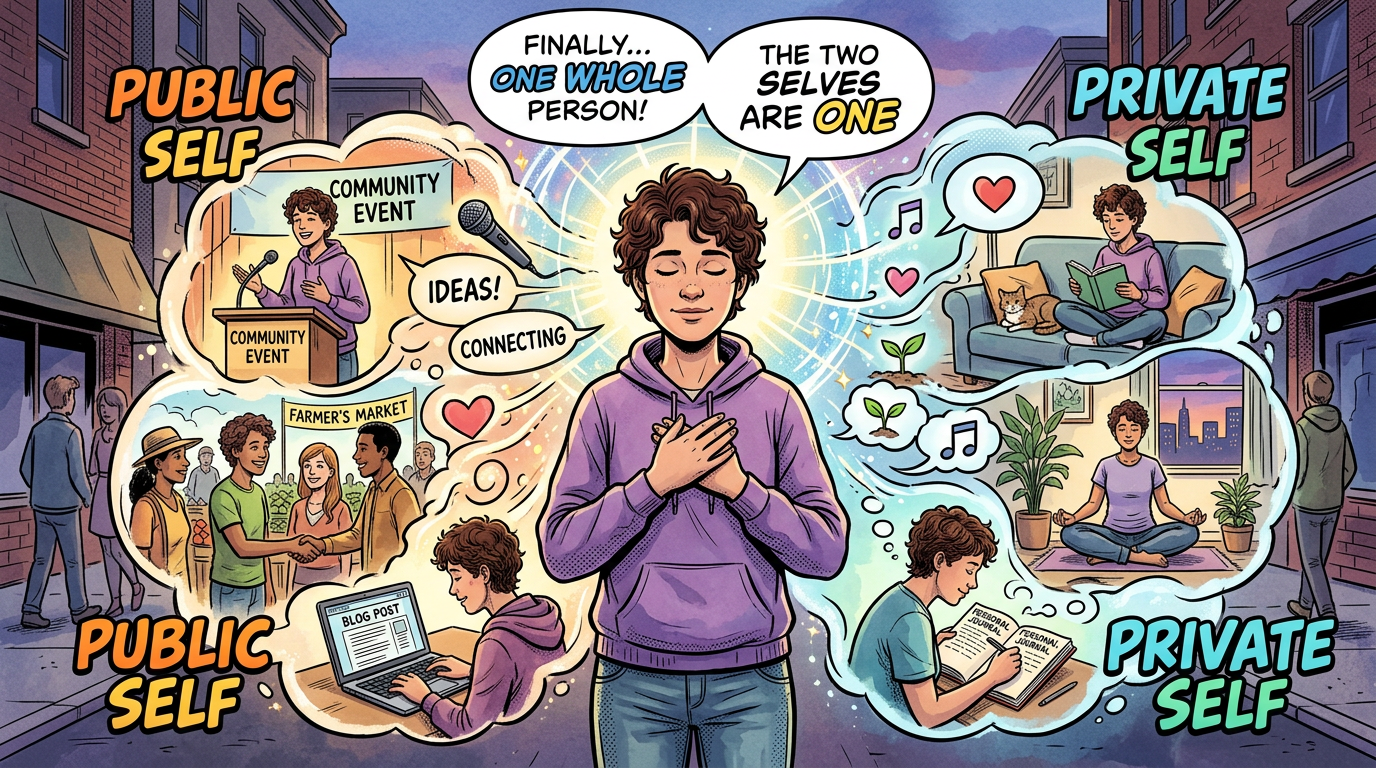
The public vs private self can feel like two different people. We may appear composed, faithful, or morally certain while privately carrying doubts, temptations, wounds, or compromises. Others see our words and habits; God sees the inner life we know most honestly.
Yet privacy is not the same as secrecy. We need quiet places for healing, prayer, and honest reflection, but concealment can also protect patterns that require responsibility. Integrity does not demand perfect consistency or total disclosure. It asks whether our beliefs, character, and conduct are moving toward truth.
So how can spiritual growth bring our public identity and private life into greater alignment? Together, we will consider how honesty, forgiveness, and redemption can help us live less divided—and more fully known.
The Two Selves We Learn to Manage
From childhood, we learn to adjust ourselves to different communities. Family roles, religious traditions, workplaces, and friendships all invite certain words, habits, and responsibilities. These social roles are not necessarily false. They can be genuine expressions of who we are and how we serve others.
Still, there is a difference between a role and a performance. A role helps us participate faithfully in shared life. Performance presents an image mainly to secure approval or avoid judgment. When fear of rejection grows, we may hide uncertainty, grief, anger, or moral failure behind polished language and visible religious behavior.
This is where the tension between the public vs private self becomes personal. Someone may comfort others while privately feeling exhausted, or speak confidently about faith while carrying unanswered questions. A parent, pastor, or professional may appear patient while struggling with resentment they have not yet named.
Having different dimensions in different settings is normal. The danger is not that we have a public self, but that we become strangers to our inner life. The private self is not merely a problem to suppress. It can reveal where healing, repentance, discernment, and deeper honesty are calling us toward integrity.
When Privacy Becomes Secrecy—and Secrecy Becomes Disintegration
Privacy is compatible with integrity. We do not owe everyone access to our thoughts, personal history, struggles, or spiritual questions. A healthy inner life needs room for reflection, healing, and honest conversation with trusted people.
Secrecy becomes harmful when it protects an image rather than a person’s well-being. Warning signs may include maintaining separate moral standards, lying to preserve a reputation, or repeatedly rationalizing hidden behavior. Over time, the public vs private self can feel less like two settings and more like two competing lives.
This division often steals peace from ordinary moments. Relationships become guarded because closeness might expose what we conceal. Even spiritual practices can feel hollow when our public claims of faith contradict choices we refuse to face.
Integrity does not require reckless disclosure or public confession for attention. It requires truthfulness, responsibility, and a willingness to bring hidden wrongdoing into the light appropriately. That may mean admitting the truth to someone we have harmed, seeking wise counsel, making amends, or accepting forgiveness. Redemption begins when we stop managing appearances and allow honesty to lead us toward healing.
The Spiritual Work of Bringing the Inner Life into the Light
Prayer gives us a quiet place to meet ourselves before God. In honest examination, we can name our motives, fears, resentments, and desires without pretending to be more mature or certain than we are. We might ask, “What am I protecting?” or “Where has love become difficult for me?”
Scripture can deepen this attention. Its stories often reveal people who were divided, afraid, or resistant, yet still met by God’s mercy. As we read, we allow its truth to challenge both our public image and private assumptions. The goal is not self-exposure for its own sake, but transformation rooted in grace.
Repentance is also more than feeling guilty. It means recognizing the truth, turning toward a different way, and repairing harm where possible. Sometimes that repair requires an apology, a changed habit, or renewed dependence on forgiveness when we cannot undo the past.
We do not have to do this work alone. A small circle of wise, trustworthy people—a mentor, spiritual director, counselor, or mature friend—can help us notice the gap between our public vs private self. Such relationships need clear boundaries and confidentiality. In safety, honest conversation can become a place where courage, healing, and integrity grow.
Practicing Integrity in Ordinary Decisions and Relationships
Integrity becomes visible in ordinary moments: keeping a promise, telling the truth when exaggeration would be easier, and honoring another person’s boundaries. It means treating people with the same respect, whether they have influence, serve us, or seem unable to offer anything in return.
We can also compare our stated values with our calendars, spending, attention, relationships, and private digital habits. Where does our time reveal what we truly cherish? These questions are invitations to awareness, not demands for moral perfection. Growth often begins with one honest adjustment.
Our public vs private self may not look identical in every setting, but trusted people should recognize a consistent character beneath the differences. Ask yourself: Where do I feel most pressured to perform? Do those who know me well see the patience, honesty, and compassion I claim to value?
Integrity also includes acknowledging limits and mistakes. We can admit weakness publicly when appropriate while protecting the dignity and privacy of others. Authenticity should serve love, not become another form of self-display. A sincere apology, a clear boundary, or a willingness to say “I was wrong” can quietly turn identity into faithful practice.
A Whole Person Before God and Others
Integrity does not require revealing everything or becoming flawless. Spiritual maturity can include honest doubt, ongoing struggle, and gradual change, when we face them truthfully rather than hiding behind a manufactured identity.
Before God and others, our public commitments and private convictions can increasingly tell the truth about the same person. With humility, grace, and responsibility, we become less divided—not by erasing the private self or perfecting the public self, but by bringing them into faithful alignment. Perhaps the next step is a quiet prayer, private repentance, a trustworthy conversation, or one choice that reflects your deepest values.

Leave a Reply