
Imagine being asked to choose between your personal convictions and the expectations of your family, congregation, culture, or community. This kind of individual self vs collective self example can arise when a person feels called toward a different path, yet fears disappointing those they love.
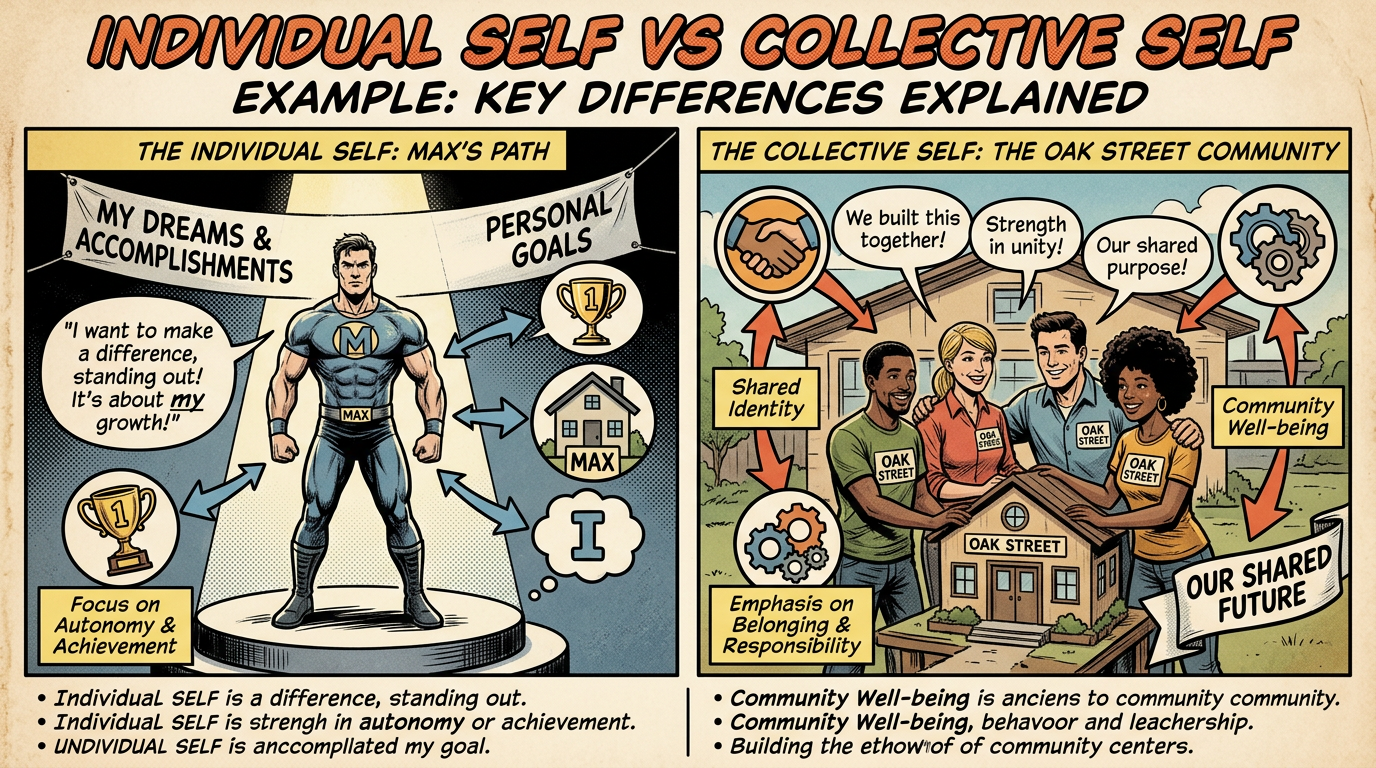
The individual self emphasizes conscience, personal responsibility, and a direct relationship with God. It invites us to ask what we truly believe and how our choices reflect our faith. The collective self, however, emphasizes belonging, shared values, and responsibility toward others. It reminds us that our decisions affect families, congregations, and wider communities.
These perspectives can seem opposed, but spiritual maturity does not require choosing one and rejecting the other. Faith often asks us to honor personal authenticity while remaining open to communal wisdom, correction, and care. The challenge is learning when to stand firmly in conscience and when to listen with humility.
In this article, we will explore both perspectives through familiar experiences and spiritual reflection. Together, they can help us pursue a faith shaped by integrity, compassion, forgiveness, and a deeper sense of connection.
What the Individual Self Looks Like in Everyday Faith
The individual self becomes visible when faith moves from a shared belief into a personal decision. Imagine a woman whose workplace quietly overcharges vulnerable customers. Though her coworkers accept the practice, her conscience troubles her. After prayer and honest reflection, she refuses to participate, even when speaking up risks her position.
This kind of individual spirituality asks deeper questions: What motives guide me? Am I acting from fear, pride, compassion, or love? A person may pray alone, examine past choices, and listen for wisdom before deciding to change careers, forgive someone, or set a needed boundary.
The goal is not simply to inherit convictions from family, tradition, or community. It is to receive them thoughtfully and take responsibility for living them. In this sense, an individual self vs collective self example reminds us that moral agency often begins in quiet places, where no group can make the decision for us.
This perspective offers authenticity, courage, and room for inner transformation. It can help us grow in redemption rather than remain trapped by old patterns. Yet personal conviction requires humility. Our preferences are not automatically moral truth, so we must keep testing them through compassion, wisdom, and honest conversation. Resources such as Going My Way. Today can also invite that ongoing reflection.
What the Collective Self Looks Like in Community
The collective self emerges when we understand our identity through relationships and shared belonging. We are not only individuals with private convictions. We are also members of families, faith communities, cultures, neighborhoods, and wider societies.
Consider a congregation caring for a grieving family. Members prepare meals, visit quietly, help with practical needs, and continue praying long after the funeral. Their support communicates, “Your sorrow belongs among us.” This is one individual self vs collective self example: personal pain is held within a community’s compassion.
These bonds shape moral life in lasting ways. The collective self encourages solidarity, accountability, service, and humility. It also gives us wisdom received through tradition and communal experience. A family’s spiritual practice, a culture’s stories, or a neighborhood’s shared memory can teach values that one person might struggle to discover alone.
Yet community is not automatically righteous. Group pressure can produce conformity, exclude outsiders, or silence a troubled conscience. Loyalty may even excuse harmful behavior when protecting the group becomes more important than truth or human dignity. Healthy communities therefore welcome honest questions and make room for repentance and reform. They help us serve one another without demanding that belonging replace moral courage.
A Practical Example: When Personal Conviction Meets Communal Responsibility
Imagine a member of a faith community discovering that a housing policy quietly excludes families with disabilities. Leaders defend it as tradition, while affected families feel unseen and unheard. The member faces a difficult choice: remain silent for the sake of unity or speak up for those experiencing harm.
The individual response begins inwardly. Through prayer, conscience, and honest self-examination, the member asks whether this concern reflects compassion or personal frustration. They seek wise counsel, study the policy carefully, and prepare to accept possible consequences, including criticism or loss of status. This is one practical individual self vs collective self example: personal conviction becomes a responsibility rather than a desire for independence.
The community also has work to do. Leaders can listen without defensiveness, invite those affected into dialogue, and examine how the policy developed. If the policy causes harm, institutional accountability may require correction, public acknowledgment, and meaningful change. Such actions do not weaken the community’s faith; they can express its commitment to redemption and justice.
Healthy discernment is neither automatic independence nor unquestioning obedience. It asks whether personal convictions serve truth and whether communal practices reflect compassion. Disagreement becomes spiritually constructive when people separate a person’s dignity from the correctness of an idea or tradition.
The member may be mistaken about some details, and leaders may have acted without malicious intent. Still, honest conversation creates room for humility, forgiveness, and reform. Unity then means more than silence; it becomes a shared commitment to truth and one another.
How to Hold Both Perspectives in Spiritual Growth
Spiritual growth asks us to hold personal conviction and communal wisdom together. We can listen deeply to our community without surrendering conscience. We can trust what we have prayerfully discerned without treating the individual self as the sole source of wisdom. This balance is at the heart of any honest individual self vs collective self example.
In practice, this may mean reflective prayer, studying sacred or ethical teachings, and seeking counsel from trustworthy people. It also means hearing marginalized voices and examining the consequences of our decisions. A choice may feel faithful to us while still causing harm, so love invites us to remain open to correction, forgiveness, and change.
Mature identity is relational. Individuals grow through families, congregations, cultures, and friendships, while healthy communities make room for questions and distinct gifts. When people can name harm without losing belonging, the community becomes stronger. Its unity rests not on silence, but on truth, compassion, and a shared willingness to keep learning.
The Self Is Personal, but Never Entirely Separate
The individual self and the collective self are not enemies. They are two dimensions of a faithful, ethical life. The individual self answers for personal choices, conscience, and the courage to act with integrity. The collective self recognizes obligations formed through family, faith, culture, friendship, and shared life.
Consider an individual who speaks against unfair treatment in a congregation or workplace. Their conscience may begin the conversation, but the community’s wisdom can help them respond with patience, context, and compassion. This is one practical individual self vs collective self example: personal conviction offers moral direction, while belonging teaches responsibility and care.
Neither perspective should rule without correction. Individualism can become self-centered, while group loyalty can silence truth or excuse harm. Spiritual maturity involves a continual conversation between inner conviction and communal wisdom, especially when either side becomes distorted. Through humility, forgiveness, and honest reflection, we learn to remain responsible for our choices while serving the people around us.
How can your personal beliefs strengthen the communities you belong to? And how can those communities help you become more truthful, compassionate, and responsible?

Leave a Reply