

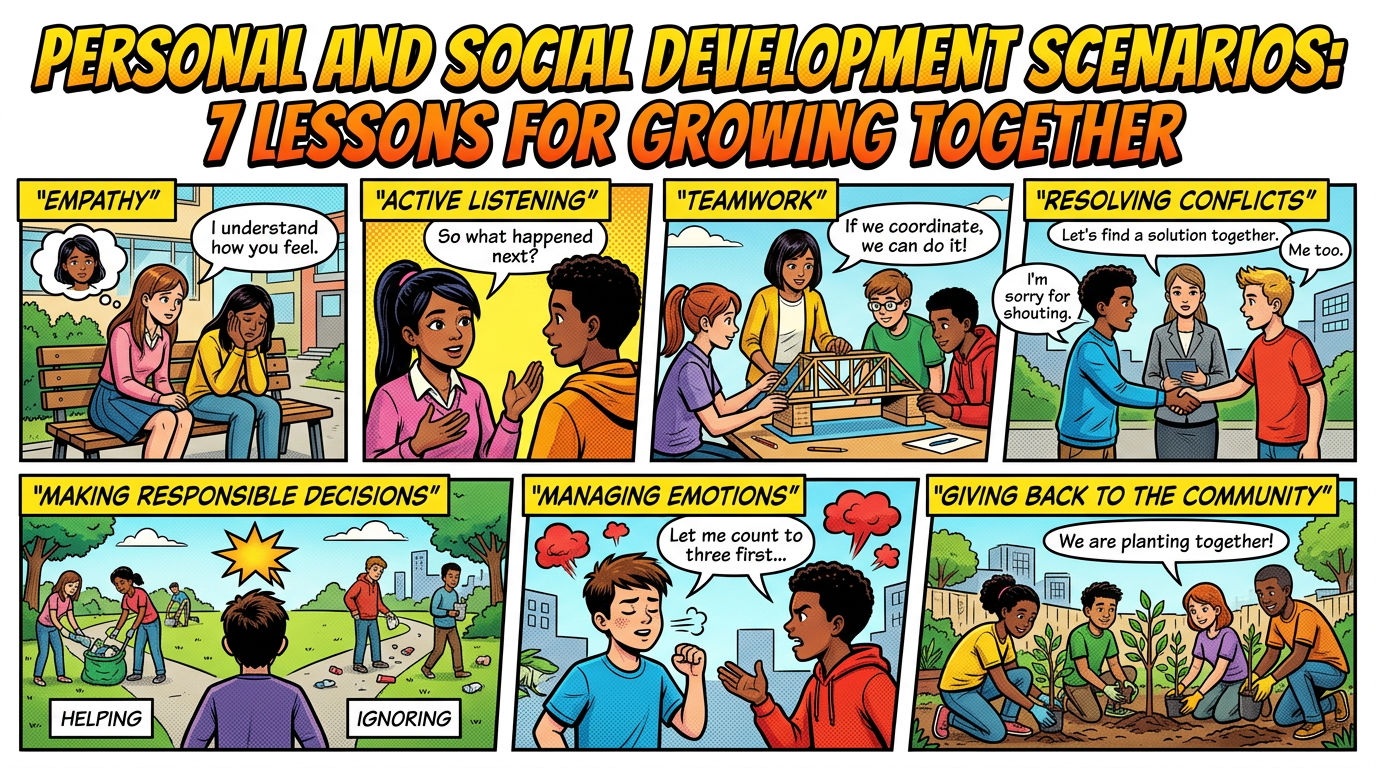
Personal and social development scenarios invite us to see growth as more than private self-improvement. In faith, spiritual maturity appears through the way we treat, serve, forgive, and encourage one another. Our inner character is shaped in relationship, not isolation.
The seven lessons ahead offer practical guidance for families, friendships, communities, and congregations. Each scenario reflects an everyday moral choice: whether to listen with patience, repair harm, welcome someone overlooked, or extend grace. Together, they show how personal growth can become a shared journey toward deeper love, stronger trust, and faithful community.
Lesson 1: Self-Awareness Makes Growth Honest
Imagine a church volunteer receiving gentle correction and responding defensively. Beneath the sharp words may be fear, pride, impatience, or even envy. Prayer and quiet reflection can reveal these motives without turning honest weakness into shame.
Grace makes self-examination possible. When we admit where we need repentance, change can begin. In these personal and social development scenarios, awareness also protects relationships. Unexamined habits can wound a family, divide a congregation, strain a workplace, or discourage a neighbor. Humility helps us listen, seek forgiveness, and grow together.
Lesson 2: Empathy Turns Difference Into Understanding
At a neighborhood meeting, Maya grew frustrated when Daniel opposed a new outreach program. She assumed he did not care about struggling families. Instead of arguing, she asked what concerned him and listened without interrupting. Daniel shared that past programs had overlooked his disabled sister’s needs. His resistance came from experience, not indifference.
Empathy does not require complete agreement. It asks us to resist assumptions, welcome patient questions, and make room for another person’s burdens. Faith reminds us that every person bears God-given dignity. In these personal and social development scenarios, attentive listening can transform difference into understanding, compassion, and wiser action.
Lesson 3: Communication Protects Community
A quiet misunderstanding can grow when no one names it. Perhaps a brief text sounds harsh, or gossip reshapes an absent person’s words. Avoiding conflict may feel peaceful, but true peace pursues honest conversation while protecting each person’s dignity.
Speak directly, truthfully, and graciously. Ask questions before forming conclusions, and describe the hurt without humiliating anyone. When discussing people who are absent, choose words that honor their humanity rather than invite judgment. These personal and social development scenarios remind us that communication can repair trust before small tensions become lasting divisions.
Lesson 4: Boundaries Can Be an Expression of Love
Consider a friend who answers every call, accepts every request, and repeatedly excuses hurtful behavior. Over time, generosity becomes exhaustion, and unspoken resentment begins replacing genuine care.
A wise boundary might sound like, “I cannot do that tonight,” or, “I will continue this conversation when we can speak respectfully.” Such limits are not selfish withdrawal. They steward our time, energy, safety, and relationships, making responsibility clearer and mutual respect possible.
Loving someone may require saying no, seeking help, or establishing consequences while remaining compassionate. In these personal and social development scenarios, boundaries protect connection by preventing harm from becoming a pattern.
Lesson 5: Forgiveness Requires Truth and Transformation
After betrayal or repeated hurt, forgiveness does not mean pretending nothing happened. It means releasing revenge while telling the truth about the wound. A friend who broke confidence may need to confess, accept consequences, and make restitution before trust begins to heal.
Mercy and justice belong together. Grace does not excuse ongoing abuse or remove the need for protection. You may forgive someone without restoring their access to your life. When repentance produces changed behavior, forgiveness can open a path toward redemption; without transformation, wise boundaries may remain necessary.
Lesson 6: Service Reveals Shared Responsibility
In many communities, a few faithful people carry most of the work while others remain passive. They organize events, visit the sick, prepare meals, and solve problems, while everyone else asks what the community can provide.
Yet service becomes discipleship when each person offers their gifts for the good of the whole. Some contributions are visible; others happen quietly through caregiving, hospitality, encouragement, administration, or practical help. These personal and social development scenarios invite us to ask not only, “What do I receive?” but also, “What does faithful participation require from me?” Growth begins when responsibility becomes shared.
Lesson 7: Accountability Helps People Persevere
Someone may sincerely commit to daily prayer, repairing a relationship, or breaking a harmful habit, then repeatedly lose momentum. A trusted friend can offer encouragement, honest feedback, prayer, and one measurable next step, such as making a call or setting a weekly check-in.
Healthy accountability is not control or public shame. It requires consent, confidentiality, patience, and mutual care. Growth is often gradual. When failure happens, a supportive community helps people return, learn, and try again rather than disappear. These personal and social development scenarios show how faithful companionship can nurture perseverance, forgiveness, and lasting change.
A Community That Grows in Grace
Together, these seven lessons show that personal and social development are inseparable. Faith becomes visible through character, honest relationships, humble service, repaired harm, wise boundaries, and perseverance. We do not mature alone; our choices shape families, workplaces, congregations, and neighborhoods.
The personal and social development scenarios remind us that growth often begins quietly. We listen before judging, apologize when we cause harm, welcome those overlooked, and accept responsibility for the good of others. These practices make room for forgiveness and redemption without ignoring accountability or the need for change.
Consider one relationship, habit, or community responsibility God may be inviting you to approach differently. What would growth look like there this week? You do not need to grow perfectly to grow faithfully. You need humility, courage, and a willingness to begin again—with others, and within a community held together by shared grace.

Leave a Reply