
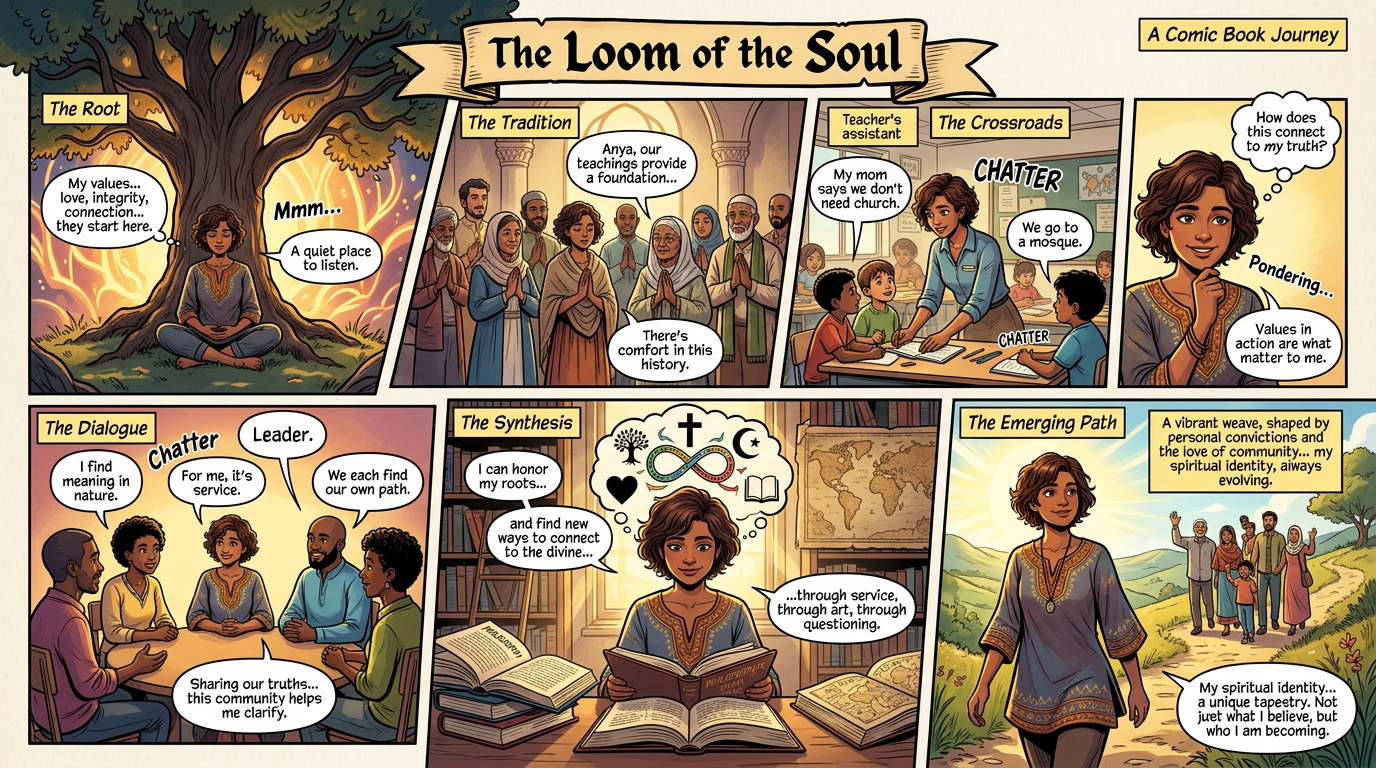
When we explore personal and social identity examples, we begin to see how spiritual self-understanding takes shape. Personal identity includes the beliefs, values, experiences, and character traits we recognize as uniquely our own. It may appear in the way we practice forgiveness, respond to hardship, or choose what we believe is right.
Social identity grows through the relationships and communities that shape our sense of belonging. Family, congregation, culture, profession, and service groups can all influence how we understand our spiritual role. Together, these identities help us discern purpose—not by placing ourselves in fixed labels, but through reflection, relationships, and moral choices. As we consider these influences, we may discover how faith connects our private convictions with the lives we share.
Personal Identity: The Inner Foundation of Spiritual Life
Personal spiritual identity begins in the quiet places of life. It is shaped by private convictions, lived experiences, and the practices that guide us when no one is watching. A person may be formed by prayer, a commitment to forgiveness, a desire for justice, or hardship that deepened their compassion.
This identity is more than personality or religious affiliation alone. Two people may share the same tradition yet respond differently to conflict, suffering, or responsibility. Their personal identity appears in the values they protect and the choices they make each day.
Self-reflection can reveal the distance between what we claim to believe and how we actually live. Someone may value forgiveness but still hold tightly to resentment. Another may pray for justice yet overlook unfairness in familiar settings. These tensions do not disqualify us; they invite honesty, humility, and growth.
Many personal and social identity examples begin with this inner work. As we notice our habits and motives, spiritual life becomes less about appearing certain and more about practicing faith with integrity. Our convictions gradually take shape through repeated choices, especially when recognition is absent.
Social Identity: How Communities Shape Spiritual Roles
Our spiritual roles are also shaped by the people and communities around us. As a parent, congregant, mentor, volunteer, or neighbor, we learn practical ways to express compassion, responsibility, and faith.
A faith tradition may give us language for forgiveness, redemption, and service. Shared rituals, such as prayer, worship, or communal meals, remind us that spiritual life is not practiced alone. These habits connect personal convictions with a larger story and a living community.
Communities can also strengthen growth through accountability. A mentor may offer wisdom during uncertainty, while a congregation may create opportunities to serve someone in need. In these relationships, personal and social identity examples become visible through everyday choices, not simply through titles.
Belonging, however, is rarely simple. Cultural expectations or group pressure may support our values, but they can also challenge our conscience. Healthy spiritual maturity includes discernment: receiving guidance with humility, setting thoughtful boundaries, and remaining open to correction without surrendering moral responsibility. Our communities can shape us deeply, yet we still must choose how to live faithfully within them.
Examples of Spiritual Roles in Everyday Relationships
Our spiritual roles often appear in ordinary responsibilities, where inner convictions meet real human needs. A caregiver may practice patience with an aging parent, choosing gentleness when frustration would be easier. This quiet work can express faith, humility, and love without any formal religious title.
A community leader may pursue fairness when resources are limited or disagreements divide neighbors. Their commitment to justice becomes meaningful through listening, transparency, and decisions that protect those with less power. Likewise, a student who defends a marginalized peer turns compassion and courage into a public act of belonging.
In a congregation, someone may offer reconciliation after a painful conflict. They do not ignore harm or demand instant trust. Instead, they acknowledge what happened, seek forgiveness, and make room for healing.
These personal and social identity examples remind us that spiritual roles are shaped through relationships. A value remains private until we translate it into responsible action. Whether we serve at home, school, work, or worship, our choices reveal how conviction is becoming character. Over time, these repeated acts help us recognize the spiritual role we are already living.
Balancing Personal Conviction and Shared Responsibility
The spiritual role we live is tested when personal conviction meets shared expectations. A family may honor a tradition we no longer understand, a workplace may reward competition, or friends may pressure us to remain silent. In these moments, authenticity does not mean rejecting everyone else. It means listening carefully, naming our conscience honestly, and choosing actions that preserve both integrity and respect.
Mature spiritual identity includes a grounded conscience and a willingness to learn. We may hold sincere beliefs while recognizing that our assumptions can be incomplete. Asking questions, hearing different experiences, and revising our views can strengthen faith rather than weaken it.
Respectful disagreement begins by seeking common moral principles, such as honesty, compassion, justice, or human dignity. Personal and social identity examples become meaningful when convictions lead to patient action, not quick judgment. We can set boundaries around religious customs, family expectations, or cultural pressures without reducing people to labels.
Humility helps us remember that every person carries a story we may not fully understand. When conflict arises, we can speak truthfully, listen generously, and leave room for growth. In this balance, spiritual responsibility becomes shared work: remaining faithful while helping create a community where others can belong.
Living Your Spiritual Role with Integrity
Spiritual identity is not simply a title, affiliation, or role others recognize. It appears through repeated choices: forgiving when it is difficult, serving without applause, nurturing relationships, and embodying values such as compassion and honesty. These personal and social identity examples show how private conviction can become public character.
Consider which beliefs shape you when no one is watching. Which communities call you toward responsibility, and how do your daily actions connect the two? Your spiritual role may evolve through new relationships, questions, and seasons of life. Yet it can remain rooted in compassion, honesty, accountability, and a willingness to grow.

Leave a Reply