

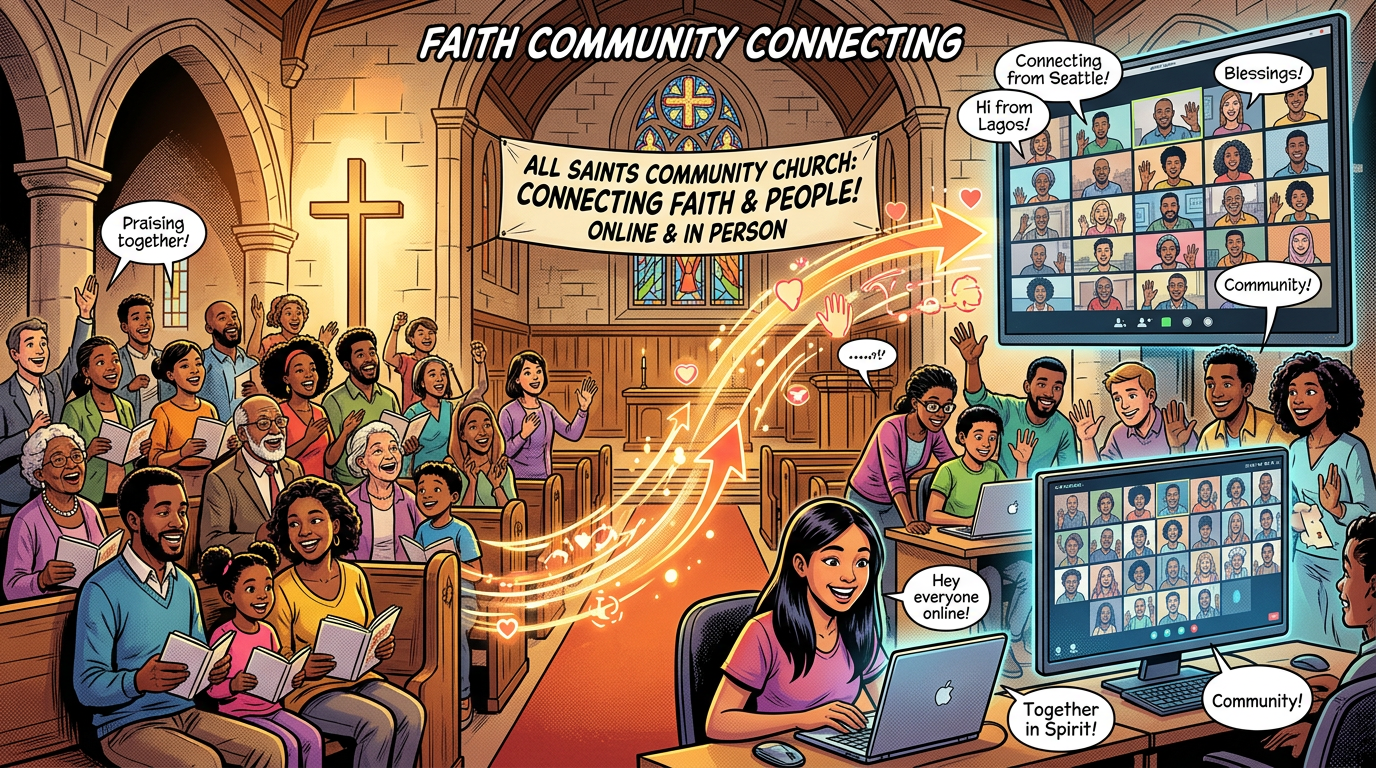
In a time of social fragmentation, many people are searching for meaningful connection. We are constantly connected through screens, yet trust in traditional institutions continues to decline. Spiritual networks are emerging in this space, offering places to ask deeper questions and find companionship along the way.
These networks can take many forms. They include congregations, online faith communities, interfaith groups, prayer circles, discussion forums, and spiritual organizations shaped by digital tools. Some gather around shared beliefs, while others begin with shared concerns about justice, grief, morality, or the search for purpose.
Consider someone who joins a virtual prayer group after moving to a new city. Or a young person who explores faith through conversations with people from different traditions. These relationships may begin online, but they often lead to in-person friendships, acts of service, and renewed participation in local communities.
Spiritual networks do not necessarily replace churches, mosques, synagogues, temples, or other established institutions. Instead, they often extend their reach, creating new pathways into faith and belonging. They also make room for people who feel uncertain, wounded, or distant from formal religious life.
Together, these networks are reshaping how people find guidance, practice faith, and engage in moral conversations. They invite us to consider what community can look like today—and how forgiveness, redemption, and personal transformation can grow through relationships both near and far.
What Are Spiritual Networks, and Why Are They Growing?
A spiritual network is a community formed around shared beliefs, questions, practices, values, or a search for transcendence. It may include people who live nearby, but geography is not its only foundation. Connection can grow through prayer, meditation, study, service, or honest conversations about life’s deepest questions.
Unlike conventional religious institutions, spiritual networks do not always require formal membership, regular attendance, or a shared building. An online prayer group may gather across several countries. A faith-based podcast can connect listeners who never meet in person, yet feel accompanied by the same stories and teachings.
Still, spiritual networks and religious institutions are not opposites. Many networks grow from established traditions, including Christianity, Judaism, Islam, Buddhism, Hinduism, and other faiths. A congregation might host livestreamed worship, while its members continue conversations in a private online group. Personal exploration and inherited tradition can belong in the same spiritual life.
Technology has helped these connections expand. Social media allows people to find communities organized around specific interests, such as contemplative prayer, scripture study, spiritual direction, or ecological responsibility. Livestreaming also makes worship and reflection available to people who are ill, traveling, caregiving, or living far from a local community.
Broader cultural changes matter, too. Migration has placed people from many traditions in the same neighborhoods and workplaces. Flexible lifestyles have made fixed schedules harder to maintain. Religious pluralism has also encouraged people to listen across traditions, ask new questions, and seek communities that reflect their particular spiritual concerns.
For some people, spirituality describes a personal search for meaning, connection, or inner transformation. Religion often includes shared teachings, rituals, moral practices, and institutions. Yet these categories overlap. A person may meditate privately, attend a weekly service, learn from a faith-based podcast, and join an interfaith service project.
Consider a local network that brings together Muslims, Christians, Jews, and people with no formal affiliation to serve unhoused neighbors. Or imagine a meditation community that meets through an app, then gathers monthly in a neighborhood center. These relationships show how spiritual networks can be both digital and embodied, personal and communal.
At their best, such communities offer more than information. They provide companionship during uncertainty and invite members to practice forgiveness, seek redemption, and care for others. In a changing world, many people are discovering that faith can be nurtured through connections both familiar and unexpectedly new.
How Technology Is Changing Faith-Based Connection
For many people, the first step into a spiritual community now happens through a screen. A livestreamed service can reach someone who is traveling, recovering from illness, living with a disability, or working during traditional worship hours. It can also welcome those who live far from a congregation or have few local religious options.
Video calls have made prayer circles, pastoral conversations, and small-group meetings possible across long distances. Private messaging groups offer another kind of closeness, allowing members to share prayer requests, encouragement, and daily struggles. In these spaces, support can continue long after a service ends.
Digital tools also make learning more flexible. Podcasts can accompany a listener during a commute, while online courses offer structured study in theology, scripture, meditation, or spiritual history. Social platforms introduce people to teachers and communities they might never encounter locally, and mobile apps provide reminders for prayer, devotional reading, or charitable action.
These tools have created new forms of participation. Someone may post a public testimony, join an online study group, or respond to a prayer request from another country. Others practice asynchronous prayer, leaving reflections that people can read and answer hours later. For a person balancing caregiving, shift work, or limited mobility, this flexibility can make spiritual life possible.
I have seen how a simple message can carry unexpected comfort. A friend who cannot attend worship may still receive a voice note, join a discussion, or ask for prayer before bed. Such moments do not erase loneliness, but they can remind us that companionship and hope remain available.
Still, digital connection has real limits. A camera cannot fully convey the warmth of physical presence, shared silence, or the practical care that often grows through face-to-face relationships. Online spaces can also collapse context, making a thoughtful disagreement appear hostile or turning a personal confession into public content.
There are further concerns about privacy, misinformation, and spiritual authority. Algorithms may guide people toward increasingly polarized communities, while polished personalities can appear trustworthy without meaningful accountability. It is not always easy to verify a teacher’s training, motives, or relationship to a faith tradition.
For these reasons, technology should remain a tool for connection, not proof of depth or truth. A large audience does not guarantee wisdom, and an intimate message is not automatically safe or spiritually beneficial. The healthiest spiritual networks combine digital access with discernment, humility, and, whenever possible, relationships grounded in genuine care.
The Human Need for Belonging, Meaning, and Moral Conversation
People do not turn to spiritual networks only for information or inspiration. Often, they are looking for a place where their questions can be held with patience, and where their lives feel connected to something larger.
Shared rituals help create that connection. A prayer before a meal, a weekly gathering, or a moment of silence can bring meaning to ordinary time. Stories and symbols also help people interpret major events, from birth and marriage to illness, grief, and death. Through these practices, members discover a sense of continuity with those who came before them and those who will follow.
This continuity can be especially important during seasons of change. When familiar roles disappear or old certainties become difficult to maintain, spiritual communities offer language for hope and renewal. They remind people that identity is not limited to a job, a diagnosis, a mistake, or a single painful chapter.
These networks also make room for moral conversation. Members may discuss suffering, forgiveness, justice, responsibility, and the meaning of a good life. Such conversations do not always produce easy answers, but they can help people examine how their beliefs shape their choices.
Peer relationships are central to this process. In a trusted group, someone might ask, “Why did this happen?” or “How do I forgive?” without pretending to be certain or spiritually complete. Others can respond not as experts above them, but as companions who have faced doubt, regret, and hope themselves.
I have seen this kind of honesty emerge in small gatherings, where a person’s carefully composed public identity begins to soften. A quiet admission of fear can invite another person to share their own struggle. In that exchange, belonging becomes more than agreement; it becomes the experience of being seen without being reduced to one’s weakness.
Still, belonging is never entirely simple. Communities can heal loneliness, yet they can also create pressure to conform. A group may encourage growth, but it may also discourage honest questions when loyalty is valued more than truth or compassion. Healthy spiritual networks make room for discernment, difference, and the freedom to step back.
The strongest communities connect belief with lived morality. Their values become visible through compassion toward the vulnerable, service to neighbors, accountability after harm, and the everyday treatment of other people. Forgiveness is not merely discussed; it becomes a practice, paired with responsibility and a willingness to repair what has been broken.
In this way, spiritual networks offer more than shared language. They give people opportunities to test their convictions through relationships, to receive support, and to become more attentive to the needs around them. Faith becomes something embodied—not only in what members say, but in how they listen, serve, make amends, and keep hope alive.
From Private Belief to Shared Practice and Service
Belief becomes more tangible when people practice it together. Across spiritual networks, members gather for prayer, meditation, scripture study, contemplation, fasting, music, and storytelling. These practices may happen in a sanctuary, a living room, or an online gathering.
Ceremonial gatherings also create space for shared meaning. A candle lighting, a sacred meal, or a quiet moment of remembrance can connect people across distance and difference. Such moments remind us that faith is not only an idea held privately, but a life shaped with others.
Regular practice gives spiritual growth a steady rhythm. Weekly prayer, daily meditation, or monthly scripture study can make reflection more than an occasional emotional experience. The commitment also creates gentle accountability, helping people return after distraction, doubt, or failure.
This rhythm does not require perfect consistency. Many people come back to a practice after illness, grief, or a season of uncertainty. In that return, they often discover something important about forgiveness and redemption: growth can include beginning again.
Spiritual networks also turn shared convictions toward practical care. Some organize food distribution, disaster relief, visits for lonely neighbors, or support for families facing poverty. Others respond to environmental concerns, public health needs, housing insecurity, and mental health challenges.
A congregation might open its kitchen to the wider neighborhood. An interfaith group might coordinate emergency supplies after a storm. A small online community might raise funds for a member’s medical expenses or create regular calls for people living alone.
This service is not a way to prove spiritual worth. It is an expression of conviction and a practical form of solidarity. People serve because another person’s hunger, grief, or vulnerability matters, whether or not anyone notices their effort.
Collaborative service can also build bridges across denominations, religions, and secular communities. Participants may disagree about theology while sharing moral goals, such as protecting children, welcoming migrants, caring for creation, or reducing loneliness. Working together often creates trust that conversation alone cannot establish.
In these settings, spiritual networks become places of learning and responsibility. Members ask not only what they believe, but what their beliefs require of them. Through worship, study, mutual aid, volunteering, and advocacy, private faith becomes a shared practice of attention and care.
Interfaith and Cross-Cultural Networks: Learning Across Differences
Spiritual networks often connect people whose traditions, histories, and languages differ. A synagogue may partner with a mosque, a church, a Hindu temple, or a secular community group. These relationships do not erase distinctions. Instead, they create space for people to meet as neighbors, learners, and fellow servants.
Interfaith dialogue means speaking and listening across religious boundaries. Comparative religious learning studies beliefs, practices, and histories to understand them more accurately. Shared service brings people together around a practical need, such as feeding families or rebuilding after a storm. None of these efforts necessarily seeks to create one blended religion.
That distinction matters. A shared food drive is not the same as combining prayers, symbols, or sacred teachings into a single system. People can cooperate without surrendering their convictions. In fact, respectful dialogue often helps individuals explain their beliefs more clearly and recognize where those beliefs genuinely differ.
I have seen this happen when neighbors gather to discuss fasting, hospitality, or forgiveness. At first, familiar assumptions can make the conversation feel cautious. As people listen to personal stories, stereotypes begin to loosen, and shared ethical concerns become easier to name.
This learning requires humility. Participants should represent their own traditions accurately and avoid speaking for communities they do not belong to. They should also ask consent before sharing sacred practices, entering religious spaces, or using symbols outside their original context.
Good intentions do not remove the risk of appropriation. A ritual may carry memories of suffering, devotion, or communal identity that outsiders cannot fully see. Approaching another tradition as a source of attractive practices, without relationship or permission, can turn appreciation into harm.
Cross-cultural networks are especially valuable before a crisis arrives. When local tensions rise, trusted relationships can make honest conversation possible. During floods, violence, or displacement, communities that have already served together may respond with greater courage and less suspicion.
These networks also connect local experience with global concerns. Climate change, migration, poverty, and religious discrimination affect communities differently, yet they invite cooperation. Listening across cultures can reveal both the unequal burdens people carry and the responsibilities they share.
Still, common ground should not become a demand for agreement. Meaningful dialogue allows room for serious disagreement about God, authority, salvation, justice, and human responsibility. The goal is not to pretend that all beliefs are identical, but to practice understanding without contempt—and cooperation without confusion.
Trust, Safety, and Discernment in Spiritual Communities
Connection can be healing, but trust should never require surrendering our judgment. Healthy spiritual networks welcome sincere questions and recognize that faith grows through honesty, not fear.
Warning signs often appear when leaders demand unquestioning loyalty or portray disagreement as betrayal. Concern is also warranted when members face financial pressure, isolation from outside relationships, or demands to disclose private information.
Spiritual communities may attract people during grief, loneliness, or crisis. That care can become harmful when someone’s vulnerability is manipulated for influence, money, obedience, or access. No promise of healing or redemption should depend on surrendering personal boundaries.
Leadership carries particular responsibility. Spiritual authority should be joined with transparency, ethical standards, and clear limits on personal and institutional power. Leaders must explain how decisions are made, how money is used, and how members can report harm safely.
Accountability also means taking allegations seriously. A community’s response to abuse claims reveals much about its values. Protecting reputation, silencing survivors, or handling every concern internally can deepen harm and weaken trust.
Individuals can practice discernment by examining several questions. What does this network teach about authority, freedom, forgiveness, and human dignity? How does it treat disagreement? Are financial practices clear? Are privacy respected? What happens when someone leaves, says no, or raises a difficult concern?
These questions are not signs of weak faith. Skepticism and discernment can accompany sincere belief, just as careful listening can accompany compassion. Asking questions may protect individuals, while also helping communities correct unhealthy patterns before they become entrenched.
Community leaders can encourage this culture by inviting independent oversight, publishing safeguarding policies, and offering accessible reporting channels. They can also honor individual conscience, avoid coercive language, and make space for members to maintain friendships and responsibilities beyond the network.
At their best, spiritual networks provide genuine care, accountability, and resilience. People pray together, share practical support, notice suffering, and help one another begin again after failure. Openness does not diminish spiritual depth; it gives love, forgiveness, and redemption a safer place to take root.
Frequently Asked Questions About Spiritual Networks
What is the difference between a spiritual network, a religious community, and a social media group?
A religious community usually gathers around shared beliefs, rituals, leadership, and long-term responsibility. A spiritual network may connect people across locations or traditions for learning, prayer, support, or service, with more flexible membership. A social media group often centers on conversation or shared interests, but may have less accountability and depth of relationship.
Can I join a spiritual network without belonging to a religion?
Yes. Many spiritual networks welcome seekers, religiously unaffiliated people, and those exploring more than one tradition. Still, each community has its own expectations. Some may ask members to follow particular practices, while others simply invite respectful participation and honest questions.
How can I tell whether an online spiritual community is trustworthy?
Begin by looking for clear leadership and accessible information about the group’s purpose. Review its moderation guidelines, privacy policies, financial practices, and handling of disagreement. Notice whether members can ask questions safely, leave without pressure, and maintain personal boundaries. A community that demands secrecy, unquestioning loyalty, or constant giving deserves careful scrutiny.
Can online spiritual relationships be as meaningful as in-person ones?
They can be. A late-night message, shared prayer, or thoughtful conversation may offer real comfort during grief or uncertainty. Digital relationships can support learning and friendship, especially for people who feel isolated. At the same time, embodied presence matters. In-person communities often make room for shared meals, practical care, and the everyday trust that grows through consistent contact.
How can spiritual networks encourage moral growth rather than only discussion?
Growth requires more than exchanging inspiring ideas. Healthy networks encourage regular practice, honest self-examination, service, and accountability. Members might volunteer together, repair harm after conflict, or ask how their beliefs shape daily choices. In these moments, forgiveness and redemption become lived realities rather than abstract words. The question gradually shifts from “What do we believe?” to “How are we becoming people who practice love?”
Building More Connected and Conscientious Spiritual Communities
Spiritual networks are expanding access to faith-based connection. They help people find guidance, friendship, prayer, and practical support across distance and difference. Yet wider access brings new responsibilities, including discernment, inclusion, privacy, and accountability.
Healthy communities hold conviction and curiosity together. Members can speak honestly about faith while remaining open to learning and growth. They do not erase meaningful differences, but they refuse to let disagreement become contempt. Instead, they practice listening, forgiveness, and the humility to repair harm when trust is broken.
The value of any network depends on the quality of its relationships and practices. A thoughtful community asks whether its teachings encourage compassion, whether its leaders welcome accountability, and whether its digital connection leads to genuine care. The most promising spiritual networks will turn conversation into action: visiting the lonely, protecting the vulnerable, serving neighbors, and seeking redemption after failure. In the years ahead, may these communities transform online belonging into embodied care, moral courage, and sustained service.

Leave a Reply