

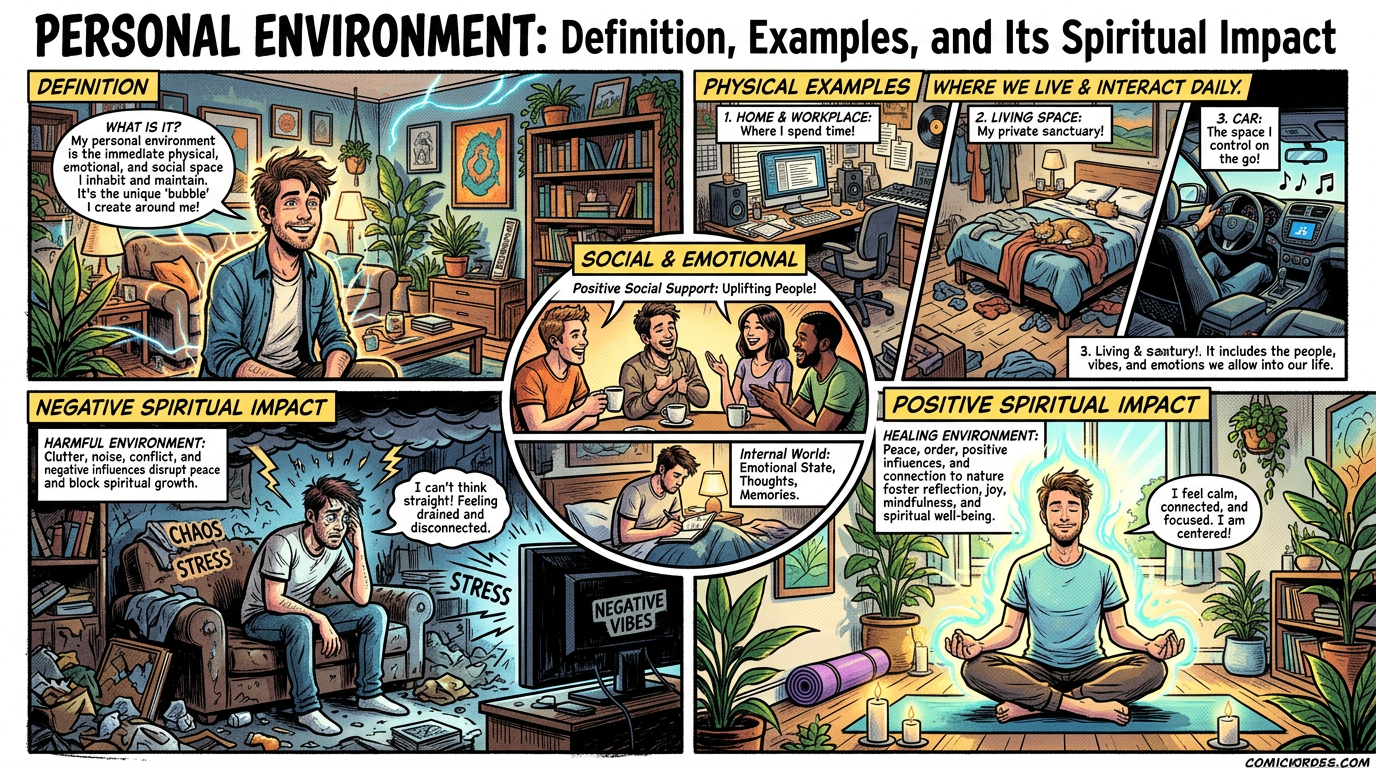
A personal environment is more than a room, neighborhood, or physical location. It is the atmosphere we repeatedly create, accept, and carry within us through relationships, habits, media, work, and spiritual influences. Over time, these surroundings can shape what receives our attention and what begins to feel normal.
Think of the conversations you return to, the voices you trust online, or the habits that fill quiet moments. These influences may strengthen peace, courage, and compassion—or quietly feed fear, distraction, and resentment. They can affect our values, moral choices, and even the way we notice God’s presence.
This does not mean faithful living requires withdrawing from the world or arranging perfect circumstances. Jesus met people in ordinary homes, crowded streets, and complicated communities. Our environments may include stress, conflict, or limitations, and facing these realities is not a sign of spiritual failure.
Instead, this article offers an honest and hopeful way to look closer. As you reflect on your own surroundings, you may discover both places needing care and gifts already present. Together, we will consider how to cultivate an environment that supports growth while remaining engaged with the world. For more reflections on living with intention, visit Going My Way. Today.
The Definition and Dimensions of a Personal Environment
A personal environment is the collection of surroundings and influences that shape how we think, feel, act, and grow. It includes more than a home or neighborhood. It also includes the inner world we carry into those places.
Our external environment includes physical spaces and social relationships. A quiet room may encourage rest, while a stressful workplace may keep the body alert. Friends, family, coworkers, and neighbors also influence our expectations, habits, and understanding of belonging.
Our internal environment includes thoughts, desires, beliefs, memories, and emotional patterns. Two people can share the same apartment yet experience very different environments within themselves. One may notice gratitude and possibility, while another remains shaped by fear or resentment.
Several dimensions work together in daily life:
- Physical space, including our homes, workplaces, and communities
- Social relationships, including the people who encourage or discourage us
- Emotional atmosphere, such as peace, tension, joy, or unresolved hurt
- Digital inputs, including social media, news, entertainment, and online conversations
- Routines, such as sleep, work, exercise, meals, and moments of rest
- Spiritual practices, including prayer, worship, Scripture, meditation, and service
A personal environment is both received and cultivated. We are shaped by circumstances we did not choose, including family history, culture, loss, and limited resources. Yet we also make choices about what we welcome, reinforce, resist, or change.
Repeated exposure gives these choices lasting influence. A small distraction may seem harmless, but it can become formative when it repeatedly directs our attention. Likewise, a brief practice of prayer or forgiveness can slowly reshape our desires and responses.
This is where spiritual reflection becomes practical. As we notice what surrounds and fills us, we can seek environments that support love, wisdom, redemption, and a deeper connection with God and others.
Everyday Examples of Personal Environments
A personal environment begins in the places we return to each day. One home may be organized around rest, shared meals, and honest conversation. Another may be marked by constant conflict, silence, or uncertainty. Both shape how people understand safety, trust, and even their worth.
Workplaces create powerful environments, too. A team that welcomes questions and recognizes effort can help people grow in confidence. A workplace built on fear or competition may slowly teach defensiveness. The same person might feel supported at home but overlooked at work, requiring different kinds of wisdom and boundaries in each setting.
Friendships also influence the direction of our lives. Some relationships encourage integrity, patience, and compassion. Others normalize harmful choices, gossip, or resentment. Love does not always mean remaining close without limits. Sometimes forgiveness includes seeking healing while creating space for healthier patterns.
Church communities can become places of belonging, service, and redemption. They can also be complicated by conflict, exclusion, or unexamined traditions. A compassionate community makes room for questions and welcomes people who are still healing. It remembers that faith grows through grace, not performance.
Our digital environments deserve the same attention. Social media feeds, entertainment, news, and online communities can shape our beliefs and emotional tone as powerfully as physical spaces. A steady stream of outrage may leave us anxious, while thoughtful voices and encouraging connections can strengthen hope. Even a personal environment online may need boundaries, prayer, and intentional renewal.
Our routines complete this picture. Sleep, solitude, exercise, prayer, and the words we repeat to ourselves all form an inner setting. We may inhabit several environments at once—healthy in one, harmful in another, and changing in a third. Recognizing this invites compassion. Growth often begins by asking what each space is teaching us and where God may be leading us toward wisdom, healing, and love.
How a Personal Environment Shapes the Inner Life
A personal environment shapes us through repetition. The words we hear, the behaviors we witness, and the responses we receive slowly teach us what feels normal, desirable, possible, or morally acceptable. In a home where kindness is practiced, forgiveness may become familiar. In a setting marked by criticism, a person may begin to expect rejection or excuse harshness as ordinary.
Our surroundings also guide our attention. Constant noise, conflict, comparison, and digital stimulation can leave little room for quiet reflection. When the mind remains busy defending itself or measuring its worth, gratitude and discernment become harder to practice. By contrast, healthy rhythms—shared meals, honest conversation, time outdoors, worship, and rest—can create space to notice God’s presence and respond with greater wisdom.
Over time, these patterns influence habits and identity. A community that celebrates generosity may make service feel natural. A group that rewards dishonesty may pressure someone to compromise, even when conscience speaks clearly. Moral decisions rarely arise in isolation; they are often strengthened or weakened by the examples and expectations around us.
Still, our environments do not control our destiny. We may not be able to leave every difficult relationship or change every circumstance immediately. Yet agency can begin with small choices: setting a boundary, seeking wise companionship, limiting harmful messages, or making room for prayer.
Transformation often grows through community. A trusted friend, faith community, counselor, or mentor can help us recognize inherited patterns and practice new ones. Through grace, forgiveness, and patient attention, God can redeem even wounded spaces, forming within us a life marked by love rather than fear.
The Spiritual Impact of a Personal Environment
Our personal environment shapes more than our routines. It can influence how readily we pray, open Scripture, worship, notice God’s presence, and respond to the needs around us. A quiet room may help one person listen, while a faithful friendship may awaken courage in another.
A spiritually healthy environment is not always comfortable or isolated. It may include loving challenge, honest accountability, meaningful service, and relationships that encourage both truth and love. Like the early Christian communities described in Acts, we often grow through shared practices, generous attention, and the willingness to carry one another’s burdens.
The spaces around us can either help us remember who we are before God or make us forget.
An unhealthy environment may fill our attention with distraction, cynicism, temptation, fear, resentment, or spiritual numbness. This does not mean people in difficult circumstances lack faith or simply need to leave. Some cannot easily change their homes, workplaces, or communities. Still, naming what a setting produces can help us seek support, establish wise boundaries, and make room for healing.
Scripture’s call to “guard your heart” is not an invitation to withdraw from the world. It is a reminder to practice discernment. Romans 12 speaks of renewing the mind, while Proverbs repeatedly commends wisdom and teachability. These themes encourage us to examine the voices, habits, and relationships shaping our inner lives.
Spiritual growth also requires attentiveness in ordinary moments. A commute can become a time for prayer. A difficult conversation can invite repentance, compassion, or moral courage. A shared meal can become an act of worship when we receive it with gratitude.
God’s presence is not limited to sanctuaries or visibly peaceful places. Through godly community, faithful practices, and honest reflection, even challenging environments can become places where redemption begins. We learn to remain present, love wisely, and recognize where grace is already moving.
Discerning and Cultivating a Healthier Personal Environment
A healthier personal environment begins with discernment, not control. We cannot remove every difficult influence, nor should we avoid every place that challenges us. Instead, ask what your surroundings consistently produce in you: greater love, patience, truthfulness, courage, and peace—or more anxiety, envy, anger, secrecy, and compromise?
Prayerful attention can reveal where change is needed. Consider your relationships, media consumption, physical space, daily schedule, worship, rest, and accountability. A trusted friend or spiritual mentor may notice patterns you have learned to overlook. Ask where God may be inviting greater wisdom, healing, or honesty.
You do not need to change everything at once. Choose one realistic step, such as limiting a harmful media habit, protecting regular rest, or creating a quieter place for prayer. Small acts of faithfulness can reshape your desires over time.
Healthy change may include different responses in different situations:
- Set boundaries where repeated harm, manipulation, or compromise is present.
- Pursue reconciliation where honest conversation, forgiveness, and mutual responsibility make it possible.
- Seek support from a counselor, pastor, trusted community, or professional when abuse, addiction, danger, or severe emotional distress is involved.
Boundaries are not rejection, and reconciliation is not pretending that harm did not occur. With humility and courage, we can remain open to redemption while taking wise steps toward safety, truth, and peace.
Living Faithfully Within and Through Your Environment
Your personal environment includes the people, places, habits, and messages shaping your daily life. Spiritual growth involves receiving God’s transforming grace and wisely stewarding the influences you can choose. No environment is flawless, but small decisions about attention, community, habits, and presence can gradually reshape your life.
Seek spaces that strengthen love, wisdom, forgiveness, and redemption. At the same time, remain an agent of grace in imperfect settings, practicing truth and compassion with healthy boundaries. As you reflect, identify one influence to reduce, one life-giving practice to strengthen, and one person or community with whom to pursue faithful growth.


Leave a Reply